Sunday, November 19, 2017

Pigskin Parade (1936), 4

Married coaches Slug and Bessie find hillbilly football tosser Amos and the team gets invited to the Yale Bowl.
(93 min) Released 1936-10-23
Director: David Butler
Stars: Stuart Erwin, Patsy Kelly, Jack Haley, ... Betty Grable, Judy Garland, Tony Martin

Genres: Comedy | Musical | Sport
http://www.imdb.com/title/tt0028103/
Watched online. The print had a lot of mirrored text and left-handshakes (reversed negative), looked sepia, and blurry; also silenced some audio (a JG song).
Watched out of sequence; belongs between Dimples and Born to Dance.

I'm very glad never to have bought a copy of this. College football occupies almost all the time - even the songs. The Yacht Club Boys sing often, and they're not great singers nor entertainers. Dixie Dunbar (King of Burlesque (1936)) dances, but I wouldn't mention it if I hadn't highlighted her in KoB.

Betty Grable is there, but doesn't do much. This not the beginning of her reign at Fox; she does several Paramount films after this.

Patsy Kelly badgers screen husband Jack Haley mercilessly. Then again, she seems to know more about football than he, and he's the coach.

Judy Garland's (1922-1969) first of 34 films (last in '63). In 2 more films, she's the top of the bill, but not always. Mickey Rooney (1920–2014) outranks her in their films together (except the first one!: Thoroughbreds Don't Cry (1937)), but he's been box office for a long time already: 171 credits (1927, then 1932-2017 sic), and he made 38 before Thoroughbreds.

Because I don't like football, nor college films, really, it took a lot of discipline to finish watching this. And watching on YouTube means never having fast forward.

Fox, dir Butler; 4

Follow Your Heart (1936), 6

An eccentric musical family is kept in order by a talented daughter with modest ambitions.
(82 min) Released 1936-08-11
Director: Aubrey Scotto
Stars: Marion Talley, Michael Bartlett, Nigel Bruce
Larry Ceballos ... dance director

Genres: Musical
http://www.imdb.com/title/tt0027629/
Watched online.
Watched out of sequence; belongs between Rhythm on the Range and Sing, Baby, Sing.

The plot sounds a little like You Can't Take It with You (1938), but only a little.

The Soundtracks page does not do justice to the quantity of songs performed, nor to their performers, who are not mentioned. My knowledge is insufficient to correct this, because I don't recognize the music, and it's often sung in a language other than English.

The female lead insists on wanting lifestyle not-X for all but the last minute of the film; and then flips to X. Very disappointing, not just because I would agree that X has its pitfalls, but much more because she had been a strong character who doesn't give any hint of doubt in her convictions, ever. She just succumbs to "love"... actually stated as hate. So this might be an acting problem, or maybe directing, certainly writing. The number of people who could act and sing and would work for Republic was likely limited. This is Marion Talley's only film, and her IMDb bio reads like she agreed with her character in the film, but shortly landed at not-X in real life.

The musical performance is plentiful. These people sing opera/operetta while doing everything. Then they decide to put on a show (remember, Mickey and Judy haven't yet emerged at MGM doing this; Pigskin Parade, her first film, was released later in '36; they finally put on a show in Babes in Arms (1939)). The last 20 minutes of the movie are mostly the lavish production numbers they achieve. Obviously Republic was trying to compete with Warner, Paramount, MGM and RKO, and did pretty well this time. It lacks the spark of BB's best, but it's impressive nonetheless. Larry Ceballos has 60 dance director credits from 1927 to 1951; many titles sound like westerns, which I'm mostly ignoring in this quest. (Did Republic build or rent the giant turntable, or rent studio time at a major?)

Again, the print quality that I watched is acceptable, not good.

Republic Pictures, dir. Scotto; 6


Hearts Divided (1936), 5+ {nm}

Napoleon needs money to fight his wars in Europe so he wants 20 million dollars for the Louisiana Territory in the United States. To help the negotiations, he sends his brother, Jerome, to ... 
(87 min) Released 1936-06-12
Director: Frank Borzage
Stars: Marion Davies, Dick Powell, Charles Ruggles, Claude Rains, E.E.Horton, Arthur Treacher, Henry Stephenson, ..., Beulah Bondi

Genres: Drama | History | Musical | Romance
http://www.imdb.com/title/tt0027726/
Watched online.
Watched out of sequence. This falls between It's Love Again and Poor Little Rich Girl. (Among MD's films, it falls immediately before Cain and Mabel.)

Since this stars Marion Davies, I expect the 7.4 rating to be inflated. The supporting cast was very promising. But this is primarily a vanity project to display MD. If I had sought a(n?) historical drama, this might have been interesting. But the 2 songs sung by DP and one partial song by the Hall Johnson Choir do not a musical make.

Trying to analyze this as a non-musical: I don't care about the people or events portrayed. The promising presence of Ruggles, Horton and Treacher (always posed in order of height) provide mild and pointless comic relief, and a source of friendship for Betsy (MD) when she's spurned. So the film's not hideous, just not to my taste.

This film has the same beginning, with different actors, as the Technicolor historical short "The Romance of Louisiana" provided as a DVD extra on The Gold Diggers of 1937. (I gave up watching it early. I suspect it did not explore Napolean's brother and his American wife.)

Warner, dir. Borzage; 5+

The King Steps Out (1936), 6-

Princess is destined to marry the Emperor, until her sister steps in.
(85 min) Released 1936-05-12
Director: Josef von Sternberg
Stars: Franchot Tone, Grace Moore, Walter Connolly.
Albertina Rasch ... ballet

Genres: Comedy | Musical | Romance
http://www.imdb.com/title/tt0027847/
Watched online.
Watched out of sequence. Should have been Captain January, Let's Sing Again, this movie, Show Boat.

Film debut of Gwen Verdon (b. 1925; Specialty Ballerina, uncredited). I did not spot her. The ballerinas were many, and no one did a solo, and no one looked to be only 11 y.o. But the print was blurry, so better luck to another try. The ballet rehearsal was the only dancing in the film.

This is a pleasant bit of fluff. Franchot Tone (b. 1905; first film in '32; maybe 2 dozen films before this; 66 total films, last in '68, the year he died of cancer.) is young and charming. Grace Moore (b. 1898; 6th of 9 films from '30 to '39; d. '47, plane crash in Denmark) is in good voice and sings a good amount of operetta. All 5 songs in the Soundtracks are music by Fritz Kreisler, words by Dorothy Fields, sung by GM, and listed as copyright 1936.

Of von Sternberg's 21 talking features, 2 are tagged Music, and 2 are tagged Musical, and 1 is tagged both, for a total of 3 candidates for this list. (I skipped the second version of The Blue Angel, same year, different language. Also omitted from his total.)

Columbia, dir. von Sternberg; 6-


Saturday, November 18, 2017

Let's Sing Again (1936), 5+

An orphan (Eight-year-old boy soprano Bobby Breen) gets a chance to sing opera in New York.
(70 min) Released 1936-05-08
Director: Kurt Neumann
Stars: Bobby Breen, Henry Armetta, George Houston

Genres: Musical | Drama
http://www.imdb.com/title/tt0027882/
Watched online. Available on Amazon Prime.
Out of sequence: should have viewed this between Captain January and Show Boat.

I guess the primary point of a Bobby Breen (lived 1927-2016) film is to hear him sing. He's got a good voice. He's also a decent actor.

This is his first film of 9. He's not as cloying as Shirley Temple is directed to act. But he portrays an "orphan" who seeks a better childhood. He values singing, and attaches himself to a faded tenor in a traveling show. The ending is incredibly facile. But we get a lot of songs, including some opera arias, along the way. (The IMDb Soundtracks page does NO justice to the quantity of singing in this film. But I have no way to credibly repair it.)

Since I don't like children performing, much less carrying the responsibility for the success of an adult venture, I'm not inclined to like this, and I didn't. The poor quality of the print contributes, and feels like it's missing some footage. Amazing production credit here and on 6 of the 9 films:

Bobby Breen Productions Inc., Sol Lesser Productions, distr. RKO, dir. Neumann; 5+

Update 17Aug2020:
Decided to buy copies of Bobby Breen films - I missed him. It's Alpha Video, so not great visual quality, but I expected that.
The plot does have some logic to it. I don't remember how Bobby first fell in with the former singer, but they bond over BB's singing, and that leads us to the eventual ending.
The kid could definitely sing.
I'm bumping this up to a 5.9 (58); 6.


The Bohemian Girl (1936), 4

A band of Gypsies are camped outside the walls of Count Arnheim's palace. Oliver's wife kidnaps the Count's daughter Arline, then leaves the child and runs off with her lover, Devilshoof. ... 
(71 min) Released 1936-02-14
Directors: James W. Horne, Charley Rogers (as Charles Rogers), Hal Roach
Writer: Michael William Balfe (opera) (as Balfe)
Stars: Stan Laurel, Oliver Hardy, Thelma Todd

Genres: Comedy | Musical
http://www.imdb.com/title/tt0027376/
Watched online. The print was only 67 min.
Out of sequence: should have viewed this between Rose-Marie and Follow the Fleet.

An opera turned into a L&H 'comedy'. It's 1936, and they spend a LOT of time doing silent shtick. A few songs from the opera are sung. Thelma Todd sings a song not from the opera, but the print I watched was silent during that scene; it's her only appearance. A young Darla Hood (Our Gang) plays the abducted child who exhibits no distress during or after the crime. She's replaced soon by an older actress playing the adult.

I'll be honest: I didn't watch it very closely. I don't like L&H; I won't attempt another of theirs. People are too mean to each other.

MGM & Hal Roach Studios, dir. Horne & Rogers & Roach; 4


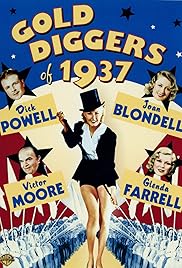
Gold Diggers of 1937 (1936), 7

When two investors inform an opportunistic dancer that they can't fund an elderly stage producer's production, she suggests they get an insurance policy on the producer's life.
(101 min) Released 1936-12-26
Director: Lloyd Bacon
Stars: Dick Powell, Joan Blondell, Glenda Farrell, Victor Moore, Lee Dixon
Busby Berkeley ... musical numbers created and directed by,
dance director; Oscar nom'd for "Love and War" [Oscars 1937]

Genres: Comedy | Musical | Romance
http://www.imdb.com/title/tt0027686/

DP has a slightly larger mustache than last time (Stage Struck). He and JB play love interests here, and may have been newlyweds during filming, which began in July according to this. (Married 19 Sept; movie released 28 Dec.) That makes it extra cute when JB helps DP shaving, and threatens his mustache for a moment.

BB steps back from full director role to dance director, and wins back my heart in the Oscar nom'd number. More below.

This is a nice variant on backstage musicals. Jane Wyman is a 'chorus girl' in the credits again, but I didn't spot her.

The Rundown:
  • Sc 1: With Plenty of Money and You. DP sings, in closeup to us, before credits.
  • Sc 2: Life Insurance Song. Sung by DP at sales convention.
  • Sc 7: Speaking of the Weather. Sung by DP to JB while whirling around an office.
  • Sc 12: With Plenty of Money and You. DP sings to JB on stoop of her aptmt bldg. 
  • Sc 17: Let's Put Our Heads Together. Formal party by the pool, tennis courts, passes song from principals to other attendees, transforms into...
  • Sc 18: With Plenty of Money and You.  Danced by Lee Dixon on the tennis courts. 
  • Sc 25 of 25: All's Fair in Love and War. 11 mins of BB joy with giant rocking chairs, black reflective and non-reflective floors, black pedestals where girls can swing their long flag poles past their feet. Worthy of the Oscar nom, and recognizable as BB if taken out of context and stripped of the movie's stars to reduce the hints that it's BB.

Accidentally ran across this chain of trivia: Broadway and film actor Osgood Perkins (here plays Morty Wethered, part of the duo manipulating events), died the next year of a heart attack at age 45, was the father of only child Anthony Perkins (1932-92), who died of AIDS and was survived by wife Berry Berenson (sister of actress Marisa) and 2 sons. Berry died in the first plane to crash into the twin towers of the World Trade Center 9/11/2001. That's a lot of real-life drama in 2 generations.

from https://www.streetswing.com/histmai2/d2keelr1.htm
Continuing with tragic real-life: Lee Dixon (b. 1910, or 1914? in Wikipedia), our new-to-feature-film tapping star, died in 1953 from alcoholism. He played Will Parker in the original Broadway production of Oklahoma! in 1943. Movie credits: 4 short films, 4 musical films in '36 & '37, plus a western in '47. Just because IMDb doesn't have a good picture of him, here's one I found, likely related to his next film, Ready, Willing and Able ('37).

Warner, dir. Bacon; 7

My post on Oscar, Best Dance Direction, 1936-38

Three Smart Girls (1936), 6+

Three sisters scheme to reunite their divorced parents before their wealthy father marries a conniving gold digger.
(84 min) Released 1936-12-20
Director: Henry Koster
Stars: Binnie Barnes, Charles Winninger, Alice Brady, Ray Milland, Deanna Durbin (b. 4 Dec 1921; this is her first feature film)

Genres: Comedy | Musical | Romance
http://www.imdb.com/title/tt0028373/

Enjoyable divorce-interference farce, with the daughters trying to foil the engagement of their father after 10 years of not seeing him at all. DD sings 3 songs, and helps ramp up the energy level to near-hysteria toward the end of the film.

Great to see Milland so young, handsome and less jaded than in older years. Good array of character actors here to lend support, including Mischa Auer.

This is a banner year for Universal. Show Boat and this are the first 2 of their films on my musicals list, both released in '36.

Universal, dir. Koster; 6+

Friday, November 17, 2017

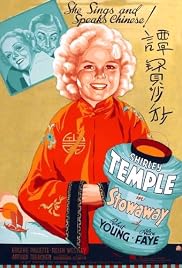
Stowaway (1936), 6+

Ching-Ching gets lost in Shanghai and is befriended by American playboy Tommy Randall. She falls asleep in his car which winds up on a ship headed for America. Susan Parker, also on the ... 
(87 min) Released 1936-12-18
Director: William A. Seiter
Stars: Shirley Temple, Robert Young, Alice Faye, Eugene Pallette, Helen Westley, Arthur Treacher, Robert Grieg

Genres: Musical | Adventure | Family
http://www.imdb.com/title/tt0028315/

ST, RY and AF are at their charming best. We get a few songs: 1 by AF, 2 by ST, 1 by both. More pleasant and interesting than usual, but will we ever get a story without ST as orphan?

2nd of 4 pairings of ST and Helen Westley. (HW was also in Show Boat and Roberta.) 3rd of 3 pairings of ST and Alice Faye. 2nd of 3 pairings of ST and Robert Young. 2nd of 4 pairings of ST and Arthur Treacher.

Fox, dir. Seiter; 6+

Born to Dance (1936), 7

Sailor Ted meets at the Lonely Hearts Club of his friend Gunny's wife, Jenny, a girl, Nora Paige, and falls in love. Nora wants to become a dancer on Broadway. Ted rescues the Pekinese of ... 
(106 min) Released 1936-11-27
Director: Roy Del Ruth
Stars: Eleanor Powell, James Stewart, Virginia Bruce, Una Merkel, Frances Langford, Buddy Ebsen
Dave Gould ... dance ensembles, Oscar nom'd for "Swingin' the Jinx" (Oscars 1937)

Genres: Musical | Comedy
http://www.imdb.com/title/tt0027387/

Jimmy Stewart sings quite a lot, and dances too. He's a better singer than dancer, or at least he expressed more deliberate discomfort dancing next to EP than singing (she's dubbed). He makes a nice tall love interest for EP. Langford is paired with Ebsen, and Merkel gets Sid Silvers, who seems a quarter foot shorter than she. He sings and dances well, in a proletariat way. (I think I just dog-whistled.)

We get eight (8!) Cole Porter songs; all make their first film appearance here, and 2 become standards.

  • Scene 2: Rolling Home. Sung by sailors on their submarine, including SS, BE and JS
  • Scene 5: Rap, Tap on Wood. EP sings & dances in hotel lobby, with sailors playing ocarinas  
  • Scene 8: Hey, Babe, Hey, Sung & danced (with simultaneous bell kicks) by all 3 couples in the hotel lobby, sailors still ocarina-ing
  • Scene 11: Entrance of Lucy James. Sung by ship's captain crew as VB boards his ship. (That is NOT a streamlined submarine. Looks more like a battleship, with a smokestack! Pause at 37 min to see.)
  • Scene 12: Love Me, Love My Pekinese. Same setting, sung by VB, danced by EP, panted by pooch.
  • Scene 14: Easy to Love. Sung by JS & EP in a park, danced by EP. [15+ other feature film credits for this song, without counting lyrics separately from music]
  • Scene 15: continued, but now Reginald Gardiner is a cop doing a manic conductor impression to the invisible orchestra that JS was conducting before. The arrangement is far more dramatic and symphonic. Fun.
  • Scene 17: I've Got You Under My Skin. Elegant and athletic professional ballroom duo performing in a nightclub.
  • Scene 23: I've Got You Under My Skin. VB sings to JS. [33+ other f.film credits, again, not double counting]
  • Scene 24: Easy to Love: FL sings as BE dances during rehearsal of show where VB is supposed to star.
  • Scene 25: Swingin' the Jinx Away (the Oscar nom). Rehearsal with EP improvising steps only, replacing VB.

  • Scene 27: Swingin' the Jinx Away. Broadway show "Great Guns": FL sings invoking Cab Calloway, 24 chorus boys and long high drapes dance. 

  • Scene 28: Swingin' the Jinx Away. Transition to acrobats on the deck of a battleship (with big guns.) BE dances, chorus sings, FL steers the ship and sings.

  • Scene 29 of 30: Swingin' the Jinx Away. Cut to EP dancing on deck. She conducts the naval brass band with her feet. At some point we get a waist-up shot of her while she's tapping, but only for a few seconds. She shows off her ballet, tap and acrobatic skills.
EP has a very flexible back, but she uses it athletically, not to act while dancing, as Ginger Rogers did.

The songs are strong, even when they're novelties. Obviously the ratio of song/dance to plot is good (50% of scenes). EP is a great dancer and choreographs herself (gets 1 such credit in '43); she'll do even better in the future. SS contributes well in song/dance/comedy. JS is always a pleasure; conveying awkwardness is a specialty. I can see why Dave Gould didn't win this year; the camera movement in The Great Ziegfeld is breathtaking. And the camera IS one of the dancers, whether it's moving or not.

MGM, dir, Del Ruth; 7

My post on Oscar, Best Dance Direction, 1936-38

Thursday, November 16, 2017

Dimples (1936), 6-

Dimples Appleby lives with the pick-pocket grandfather in 19th century New York City. She entertains the crowds while he works his racket. A rich lady makes it possible for the girl to go legit. "Uncle Tom's Cabin" is performed.
(79 min) Released 1936-10-09
Director: William A. Seiter
Stars: Shirley Temple, Frank Morgan, Robert Kent
Bill Robinson ... dances directed by

Genres: Family | Musical

ST dances 3 or 4 times, as a busker, and as little Eva in Uncle Tom's Cabin. The most interesting sight was the minstrel number, which is supposed to occur before the Civil War; it looks a lot like something Mickey and Judy did at MGM in few years. Oh, my, I just checked for a dance director. I swear I thought some of her moves looked like Bojangles, and sure enough, he was the architect. Wish he'd been afore the camera too.

ST seems more self aware here, distracted from her performance perhaps. I get the idea she'd rather be elsewhere, doing something more interesting. Or I could be projecting my own thoughts on her.

Fox, dir. Seiter; 6-

Cain and Mabel (1936), 5+

A talented boxer and a gifted dancer hope to increase their waning popularity by inventing a fictitious love affair for the benefit of the tabloids.
(90 min) Released 1936-09-26
Director: Lloyd Bacon
Stars: Marion Davies, Clark Gable, Allen Jenkins
Bobby Connolly ... production numbers staged by, Oscar nom'd for "1000 Love Songs" (starts about 48 min in, lasts about 9 min); Oscars 1937

Genres: Comedy | Musical | Romance
http://www.imdb.com/title/tt0027413/

Watched here:
https://ok.ru/video/295600654990

Lots of fun trivia; my favorites are that MD kept the full-size merry-go-round built for the Coney Island number (starts about 30 min in) for her Santa Monica home, and that Hearst paid for the permanent expansion (roof-raised 35 feet) of the sound stage for the A Thousand Love Songs number.  Suspicious trivia: that Hearst would not allow Dick Powell on the film because MD was attracted to him, but CG was borrowed from MGM to kiss and hug MD. (Then again, it looks like he's kissing her chin, not her lips.)

Some rehearsal scenes, primarily MD learning a routine (tapping atop GC's head in a hotel room, yes, the same meet-cute as in The Gay Divorcee, except MD must continue tapping), and 2 major production numbers: Coney Island and I'll Sing You a Thousand Love Songs. This was released about 6 months after The Great Ziegfeld ('36); was WB trying to compete with the Thousand Love Songs number? Or just with prior BB numbers? They use Shadow Waltz as one of the 1000 songs. Bobby Connolly deserved the Oscar nom for this, and he used well the extra height of the enhanced sound stage.

Some fans have really skewed the ratings of MD movies. This one sits at 7.7. Of course, I'm not a fan of Clark Gable: I like him in some things, but have not collected his movies at all. While I'm at it - I don't like MD's wardrobe here, onstage or off. Orry-Kelly gets "gowns" credit, and his other films don't jump out at me as having inferior wardrobe, so maybe it's MD and/or Hearst?

Really only sought this out because of the Oscar nom. That number is worth revisiting. Otherwise, no. And don't get distracted by whether MD has a dance double; none listed in the Soundtracks, but the agility of some moves, the camera distance then, and the cuts to face-visibility suggest a double. Just enjoy it.

Warner, dir. Bacon; 5+

My post on Oscar, Best Dance Direction, 1936-38


Stage Struck (1936), 5+

Broadway dance director George Randall (Dick Powell) is stuck with staging a Broadway show starring Peggy Revere (Joan Blondell), a wealthy but untalented performer who is starring only ... 
(91 min) Released 1936-09-12
Director: Busby Berkeley
Stars: Dick Powell, Joan Blondell, Warren William, Frank McHugh, Spring Byington

Genres: Comedy | Musical
http://www.imdb.com/title/tt0028305/

Watched online:
https://ok.ru/video/305930504846

Five songs by Harold Arlen and Yip Harburg; none predict Over the Rainbow (written for The Wizard of Oz (1939)).

Jane Wyman (b. 1917), who's been a chorus girl since '32, with 15 credits before this, plays Bessie Funfnick (still uncredited), her first named character, and has actual lines here. You can clearly see her face for about 30 seconds, starts 48 mins in. She has 6 more uncredited roles, but starts getting names consistently after 4 films.

This film was released Sept 12. DP and JB married on Sept 19. Divorced July '44. DP has a pencil-thin mustache and got fired at least once, but got rehired somehow. JB plays a demanding diva, and they're very unfriendly to each other.

[I wasn't paying such good attention. Was reading about IMDb taking down the Ratings features and the Character pages. I'm sympathetic to their maintenance burdens, but the ability to refine a list on the list page is really useful.]

Anyway, there is no credit for dance director. Because there was no dancing. So we have BB as the film's director, and NO rhythmic movement? Did he have to swear off his psychedelic drugs to become the top dog? His gain is our loss. WB, no need to release this to DVD.

Warner, dir. Berkeley; 5+

Swing Time (1936), 9

A performer and gambler travels to New York City to raise the $25,000 he needs to marry his fiancée, only to become entangled with a beautiful aspiring dancer.
(103 min) Released 1936-08-27
Director: George Stevens
Stars: Fred Astaire, Ginger Rogers, Victor Moore, Helen Broderick, Eric Blore
Hermes Pan ... dance director, Oscar nom for Bojangles of Harlem (see all noms)

Genres: Comedy | Musical | Romance
http://www.imdb.com/title/tt0028333/

This has all the elements of the great F&G films. Penny finds Lucky annoying when they meet, he seduces her with dance, twice (Pick Yourself Up and much more seriously in Never Gonna Dance). We have the great white/black rooms, beautiful gowns / formal wear, and excellent comedy relief (HB with Victor Moore instead of E.E.Horton; Blore is welcome, but only present in the dance academy). The songs by Jerome Kern and Dorothy Fields are superb; having all songs from one source adds cohesion (all songs here are making their film debut, so likely written for this). Plus we get an extra plot complication with Lucky already engaged to another back home.

Although this has greater emotional depth, primarily from Never Gonna Dance, I'll stick with rating Top Hat higher. Somehow Swing Time drags a wee bit, although both films are the same length (within 2 minutes). Top Hat has a grand ensemble number; none here (24 chorus girls in the Bojangles number falls short of "grand ensemble", since they are primarily backup/support for FA). Top Hat has 5 dance numbers; only 4 here. Top Hat has 2 FA solos, one is hooked into the plot (the cute meet); only 1 here.

The dances, songs (*no dancing):
  • Scene 10: Pick Yourself Up, F&G in the dance academy, over the short white fence
  • Scene 13: The Way You Look Tonight*, FA to Ginger in shampoo, F&G reprise; Oscar winner, Best Song 
  • Scene 16: Waltz in Swing Time, F&G
  • Scene 19: A Fine Romance*, F&G in snowy setting
  • Scene 21: Bojangles of Harlem, FA
  • Scene 24 of 27: Never Gonna Dance, F&G (47 takes in one 10-hour day); the dance incorporates melodies from TWYLT, WIST & AFR
Frankly, I always cringe a lot during Bojangles of Harlem, and not just at FA in blackface. This is supposed to be a tribute to Bill Robinson, but it misses the beauty of Robinson's style. The giant face/feet opening, FA's costume, and his posture while dancing are all winceworthy. I've seen a lot of Robinson's work, and never saw a gimmick like the giant visual props, the costume is too busy/clownish, and Robinson doesn't bend at the waist and flail his arms as much as FA did here.  The technical gimmick of dancing with his shadows (rear projection? Chroma key?) is nice, but the split screen reflection dance in Strike Me Pink ('36) is far more impressive to me in the required precision of lining up Sunnie O'Dea with her rogue reflection when they rejoin, twice. Bizarre that BoH is the number nom'd for Oscar, especially with NGD here too.

Very good commentary track by John Mueller, who wrote the book "Astaire Dancing." He echoes some of what I say about the Bojangles number, and says FA's dancing resembles John Bubbles more than Bojangles. That's John W. Sublett of the dance team Buck and Bubbles. Mueller mentions that Bubbles originated the role of Sportin' Life in Porgy and Bess on Broadway the year before, and relates FA's costume to that. I have some of Bubbles' films, so I'll be more alert when watching one. Mueller also describes that the shadow dance was filmed on a blank background, then the positive dance was done likewise, and they were optically printed together; so yeah, early Chroma key. And I like Mueller's point that the shadows are distracting: the viewer is too busy searching for flaws to sit back and enjoy the dance.

Next time, try to ignore the name of the Bojangles number, and the blackface, and the distraction of the shadows, and see if you can't enjoy the dancing. After all, that chorus straightens SO nicely when they line up with the camera.

Really, this would be one of my desert island films. I adore the 3 other dances here, and the way they tease us at the end: will they dance once more?

RKO, dir. Stevens; 9

My post on Oscar, Best Dance Direction, 1936-38

Wednesday, November 15, 2017

Sing, Baby, Sing (1936), 6

Nightclub singer Joan Warren's agent Nicky puts her into situations designed to advance her career.
(90 min) Released 1936-08-21
Director: Sidney Lanfield
Stars: Alice Faye, Adolphe Menjou, Gregory Ratoff, Patsy Kelly, Ritz Brothers, Tony Martin

Genres: Musical
http://www.imdb.com/title/tt0028255/

A nice piece of fluff. Everyone does what you'd expect of them, so long as you remember that Alice Faye also dances.

First film credit of the Ritz Brothers. Their mania revolves around funny movement and impressions of forgotten celebs. (Harry Richmond??) The Marx Brothers had a point: make fun of those in power. The Ritz Brothers could sing and dance, but didn't do any verbal comedy like Groucho did with everyone, including Groucho v. Chico. At least not in this film, and I only have 4 of their 15+ appearances, so I shouldn't make any definitive statements. I also don't know if they ever were the stars of a film, as the MB were.

This is not Tony Martin's first appearance, but it's more substantial than what I've seen so far. I couldn't tell you if he got to sing a full song all the way through.

Fox, dir. Lanfield; 6

Rhythm on the Range (1936), 5

Cowboy Jeff Larabee returns from the east and meets Doris Halloway, a young girl, that he regards as a vagabond, till he learns that she's the owner of the farm where he works. He tries to ... 
(87 min) Released 1936-07-01
Director: Norman Taurog
Stars: Bing Crosby, Frances Farmer, Bob Burns, Martha Raye, Roy Rogers, Sons of the Pioneers, Louis Prima

Genres: Musical | Romance | Western
http://www.imdb.com/title/tt0028178/

The best thing about this movie is seeing Louis Prima playing trumpet in a couple of numbers. The catch is, these are Western songs, but often performed swing style.

No one who wants to prove Frances Farmer was a great actress is going to cite this performance. The gigantic bull steals most of her scenes.

Martha Raye is as annoying as possible, without providing much to redeem the pain. The swing-style Western numbers she sings just contribute to the annoyance.

Roy Rogers sings a few words by himself with the camera on him, and he doesn't really lift his head enough to give us a proper view of his face. He is truly just one of the Sons of the Pioneers here.

And let's get a sanity check on whoever decided to cast Bing in a Western, even a modern one with cars. Fortunately the rodeo where he's competing offers a prize for best singer.

I own this because of the other title on the disc, also a BC western, but the costar is Mary Martin, who, like Ethel Merman, was a Broadway star who made far too few films. It's a 1940 release, so it'll be a while before I watch it.

Paramount, dir. Taurog, 5

Monday, November 13, 2017

San Francisco (1936), 6+

A Barbary Coast saloonkeeper and a Nob Hill impresario are rivals for the affections of a beautiful singer, both personally and professionally in 1906 San Francisco.
(115 min) Released 1936-06-26
Director: W.S. Van Dyke (uncredited)
Stars: Clark Gable, Jeanette MacDonald, Spencer Tracy
Val Raset ... dances stager

Genres: Drama | Musical | Romance
http://www.imdb.com/title/tt0028216/

First of 3 pairings of Gable and Tracy. (Others: Test Pilot ('38) and Boom Town ('40).) Tracy is very effective conveying both his admiration for and his disappointment in Gable's character. Tracy was nom'd for Best Actor; film nom'd for Best Picture. See all 6 Oscar noms.

JM sings a lot, including a lot of opera, primarily Gounod's Faust. Her stage costumes are superb. But the character she plays is a mess, easily swayed that she's in love with one man then the other, that she'll perform in one very different venue then the other (saloon versus opera), that she adheres to one morality then not. I suppose the idea is that CG is so compelling he confuses her, but her disloyalty to him is just as troublesome as any other switch.

The best part of the film is the 1906 SF earthquake and fire. As Gable stands before the fire, I had to remember this preceded the burning of Atlanta in Gone with the Wind ('39). They didn't start awarding Oscars for Special Effects until '38.

MGM, dir. Van Dyke; 6+

Poor Little Rich Girl (1936), 5+

The daughter of a wealthy businessman becomes lost in the city while traveling to a new school, and is taken in by a pair of down-on-their-luck performers.
(79 min) Released 1936-06-25
Director: Irving Cummings
Stars: Shirley Temple, Alice Faye, Gloria Stuart, Jack Haley
Ralph Cooper ... dances staged by
Jack Haskell ... dances staged by

Genres: Adventure | Comedy | Family | Musical | Romance

Watched colorized copy on YouTube. Not out on DVD? Only VHS. And no reviews on the Amazon Prime video. Google Play has reviews and a sample; same price as APV.

Even though we have plenty of singing and dancing here, it doesn't hold my attention. The premise, that ST wanders off and attaches herself to various adults, and somehow knows to avoid the persistent predator, is nauseating. So my brain is too busy rejecting the basics to enjoy the good bits. Jack Haley and Alice Faye can dance, and she sings well. ST demonstrates her dancing chops, and sings. But the dancing isn't a little girl having fun with Uncle Bill, it's a child being exploited by strangers who know they should be trying to find her rightful guardian. So let's reject this script and work on another.

Fox, dir. Cummings; 5+


It's Love Again (1936), 6

Elaine Bradford is a young singer and dancer, looking for her big break. Peter Carlton is a gossip columnist facing a deadline and a blank page. So, Peter invents "Mrs. Smythe-Smythe", a ... 
(83 min) Released 1936-05-06
Director: Victor Saville
Stars: Jessie Matthews, Robert Young, Sonnie Hale
Buddy Bradley ... dances and ensembles arranger

Genres: Comedy | Musical
http://www.imdb.com/title/tt0027810/

Watched on Amazon Prime, poor copy: blurry video, lots of hiss in the sound and 5 minutes shorter than IMDb listing.

JM was a delightful singer/dancer/comic actor. Here she has a male partner for some dances; I can't figure out his name. Some pretty ensemble work, but not terrific. Cute plot.

Robert Young was in Secret Agent ('36, dir. Hitchcock, same studio), released immediately before this one.

Gaumont British Picture Corporation, dir. Saville; 6

Sunday, November 12, 2017

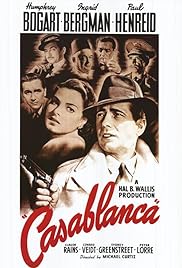
Casablanca (1942), 9 {nm}

In Casablanca in December 1941, a cynical American expatriate encounters a former lover, with unforeseen complications.
(102 min) Released 1942-11-26
Director: Michael Curtiz
Stars: Humphrey Bogart, Ingrid Bergman, Paul Henreid, Claude Rains

Genres: Drama | Romance | War
http://www.imdb.com/title/tt0034583/

Went to see this in a theatre. I came out smiling, but the group experience and the large screen thing wasn't really great. This is an intimate movie, and doesn't need size. Plus, the big guy who sat down in front of me obstructed a small part of my view. And the guy behind me, who was counting aloud how many times Rick said "Here's looking at you, kid." was mildly annoying (it was 4). The theatre didn't dim the final house lights until about 5 minutes into the movie, likely because a patron left the room to complain. When my legs started to ache, I couldn't do enough to alleviate it. And I have the blu-ray with lots more extra features than Benny Mankiewicz delivered, although I liked his tie.

Other than that Mrs. Lincoln... [Spoiler alert!] I don't know why the players were unsure of how the story would end (the script was being written as they were shooting). Clearly Rick can't take Ilsa away from Victor, because that could distract Victor to the extent that he wouldn't be able to contribute to the Resistance any more. Rick had already lived with the torment of losing Ilsa, no way could he sustain the guilt of hurting Victor, especially knowing that exact pain for himself. And the censors wouldn't allow a 3-way in 1942. So unless Ilsa got killed (but Bergman's question was "who do I end up with?"), of course she was staying with VL.

I'm amazed that I cried again when the patrons at Rick's sing La Marseillaise louder than the Germans sang their Nazi song. I don't swoon for the romance, but that bit of bravery in the face of the oppressors, gets me every time. It helps that it's a darned good anthem, of course. I didn't need to wipe away the 2 tears down each cheek, but I'm still impressed.

Dooley Wilson gave an excellent performance. He looked his age (46) in this film, so it was winceworthy when Ilsa asked a waiter to send the "boy" at the piano over to her table. Of course, over at MGM, Mickey and Judy were in blackface for a minstrel number in Babes on Broadway ('41), so I shouldn't be so surprised. The good news is that Sam was treated with respect, and Sam didn't kowtow.

Warner, dir. Curtiz, 9

5Mar2023 update: Saw this in theatre again, not realizing I'd done so before. Absolutely agree with the opening of the comments above, esp. about this not needing the big screen. Today I had only 1 minor audience problem: same person several rows in front of me getting up to leave the room at least twice. Leonard Maltin did the intro; he has a face for radio/small TVs.
Again La Marseillaise is the best moment, esp the guitar-playing singer, plus Rick's recently former gf.
I winced again at the "boy" usage, and appreciated DW's performance. 
Bergman, Bogart, Rains and Henreid were perfect, and I wanted more of Lorre. And as Maltin pointed out, all the supporting players were very well cast.
So 5.33 years later, and my reactions are basically the same.
It's a great film.

She (1935), 8 {nm}

Leo Vincey, told by his dying uncle of a lost land visited 500 years ago by his ancestor, heads out with family friend Horace Holly to try to discover the land and its secret of immortality... 
(101 min) Released 1935-07-12
Directors: Lansing C. Holden, Irving Pichel
Stars: Helen Gahagan, Randolph Scott, Helen Mack, Nigel Bruce
H. Rider Haggard ... (from the novel by)
Benjamin Zemach ... dance director, Oscar nominated for "Hall of Kings"

Adventure | Fantasy | Romance | Sci-Fi

I chose to watch this now because it was nominated for Best Dance Direction, and I was ready to watch a non-musical. (See the winner and other noms here.) The nom'd scene begins around 1:20 of the 1:42 length Kino print (scene 11 of 13). [About 5 minutes before the dance scene, we're on a terrace of the palace, overlooking the enormous valley of her domain. The terrace and the sheer drop from its edge reminds me of Black Narcissus ('47).]

The pageantry (ooh, look at the word pagan there) of the She scene, and the parade of small groups of dancers is very satisfying. (That parade, and how they dance, reminds me of the future Jack Cole (b. '11) work in Kismet ('55); his first film credit is Kismet ('44).) The colorized version for this scene is worthwhile. (Otherwise, even though it's 2007 processing overseen by Ray Harryhausen, the colorization does NOT look good to me.) My ongoing gripe with RKO persists here: they cut the length of the parade by simply dissolving to a new group of dancers without changing camera angles, and they do so multiple times. This makes me too aware of the editor, more than with any other technique and I hate that. Fortunately, other editors cut to reaction shots or something else to mask the loss of time. This film is one of only 2 credits for DD Benjamin Zemach, the other in '61.

In the commentary track, they mention that Merian C. Cooper, the producer of this film, was frustrated by RKO's veto of funding to film this in color, and formed Pioneer Pictures Corp, which made the first color feature, Becky Sharpe ('35), and Dancing Pirate ('36, also Cooper-produced), the film I watched immediately before this one... by coincidence! They also mentioned that She did not make a profit until re-released in '49 with another Cooper-produced film, The Last Days of Pompeii ('35) on a double-bill. Pompeii is among the dance direction credits of Russell Lewis, who DD'd Dancing Pirate. (I know that once I stepped into RKO in the year '36 I would run into common credits, but the fact that I stepped BACK into RKO '35 at just this moment is amazing. I did not notice that Cooper produced Pirate until I looked for it now.)

Works by H. Rider Haggard adapted to the screen: King Solomon's Mines, others in the Allan Quartermain series, and She (the first in the Ayesha series. The 2 series came together in one of his novels.) These generated 5 films with King Solomon in the title, 3 with Allan Quartermain in the title, and 8 (so far) with title She, plus The Hidden Valley, and The Vengeance of She for a total of 10. See them here. The earliest feature was 1916, the most recent 2001. 

I think I first saw the 1965 version starring Ursula Andress. This 1935 version stars Helen Gahagan Douglas, who was the third woman and first Democratic woman elected to Congress from California; she served in the House for 3 terms (1945-51). She then ran for US Senate in a particularly ugly campaign against Richard Nixon. Read more here. This was her only film. She was married to Melvyn Douglas since '31 until her death in '80.

I enjoy the topics of eternal life and a remote hidden civilization. (Yes, Lost Horizon (1937) is a fave.) Nigel Bruce was well cast and well used, as was Randolph Scott. (Yes, I don't like him in F&G movies, but adventure is perfect for him.) I also like Helen Mack here, as I did in Kiss and Makeup ('34) and also as Mollie Malloy in His Girl Friday ('40). Gahagan is appropriate as the regal amoral immortal.  Gustav von Seyffertitz as the queen's top advisor and manipulator is excellent.

Former Olympian Jim Thorpe is credited as Captain of the Guard. I didn't spot him, and the commentary track didn't help.

Next viewing: pay attention to the Max Steiner score.

RKO, dir. Holden & Pichel, 8

My post on Oscar, Best Dance Direction, 1936-38

Saturday, November 11, 2017

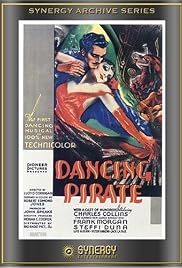
Dancing Pirate (1936), 6- Color


The story of a Boston dance teacher who gets shanghaied by buccaneers who might make his next steps be off the plank!
(83 min) Released 1936-05-22
Director: Lloyd Corrigan
Stars: Charles Collins, Frank Morgan, Steffi Duna
Russell Lewis ... dance director, Oscar nominated for "The Finale"

Adventure | Comedy | Music | Musical | Romance

Watched in color on Amazon Prime, full length; this is a public domain film. 

See other Oscar nominees here. Russell Lewis has 3 films and 1 short as his IMDb credits, all as dance director: Becky Sharpe (1935, 1st color feature) and the other are not considered musicals. This is the 3rd 3-strip Technicolor feature, according to an IMDb trivia item.

The print quality is poor, nauseatingly blurry. Since Rita Hayworth is part of her family dance troupe here, billed as Royal Cansinos, and there was no specialty dance, I can only assume they were part of the larger ensemble. A couple of times I thought someone might be her, but never got close enough to be sure. I know what she looks like around this time, still with her original low hairline. It's still pretty low in Only Angels Have Wings (1939), as seen here:
The male lead, Charles Collins, dances well. He would have been a nice addition to some studio's roster of lead male dancers, but he made only 7 more movies in the next 36 years, and perhaps none as a dancer. The female lead, Steffi Duna, dances well also, but of her 26 films, only one other is listed in her Soundtracks credits.

The comedic cowards, Frank Morgan and Luis Alberni, lighten the mood a bit. Familiar face Jack La Rue is one of the villains; he provides menace and humor, as usual. 

I find it strange that someone would invest in this property as the first 3-strip Technicolor musical. Never Astaire and Rogers at RKO. Perhaps this is partially why: if this did as badly at the box office as I suspect, RKO probably nixed any idea of converting F&G to color. (Plus they looked so grand in those big white rooms.)

The finale, the reason for the Best Dance Director Oscar nom, is pretty short for musicals of this era. A big musical finale is usually between 8 to 12 minutes; this is less than 4 minutes of dancing. The cape work was nice, but I'm sure I could nominate better scenes from this year.

If you watch this again, try a b/w print to catch La Cansino. And when you do, watch the dance class scenes. Future First Lady Pat Nixon is credited as one of those students.

Pioneer Pictures Corporation w/ distr. RKO, dir. Corrigan, 6-

My post on Oscar, Best Dance Direction, 1936-38

Captain January (1936), 6-

A little girl named Star lives with a lighthouse keeper who rescued her when her parents drowned. A truant officer decides she should go to boarding school but she's rescued by relatives.
(77 min) Released 1936-04-17
Director: David Butler
Stars: Shirley Temple, Guy Kibbee, Slim Summerville, Buddy Ebsen
Jack Donohue ... dances staged by

Comedy | Musical | Family

Buddy Ebsen and ST do a couple of dances, which elevates this above 5. Otherwise this is a simple manipulative melodrama, the kind that makes me hate the employment of children. 

Fox, dir. Butler, 6-

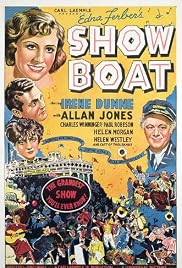
Show Boat (1936), 9-

Despite her mother's objections, the naive young daughter of a show boat captain is thrust into the limelight as the company's new leading lady.
(113 min) Released 1936-05-14
Director: James Whale
Stars: Irene Dunne, Allan Jones, Charles Winninger, Paul Robeson, Helen Morgan
LeRoy Prinz ... dance numbers staged by

Comedy | Drama | Musical | Romance
http://www.imdb.com/title/tt0028249/

One of the stage shows that Ziegfeld produced in 1927; other films made in 1929 and 1951. Because this dvd was not released until 2014, I know Show Boat from the '51 film. This one has songs written especially for this film, and not used in '51. (MGM bought the rights AND the 2 prior films from Universal when planning theirs.) Irene Dunne (b. 20 Dec 1898) is excellent for Nola; I didn't realize how old she was until I read it somewhere. Allan Jones is excellent for Ravenol (and he's 8 years younger than ID). Both of them suit the vocals, are excellent to look at, and convey a warmth together.

Four members of the Broadway cast are here: Winninger, Robeson, Helen Morgan and Sammy White all played in the '32 revival together, and all but Robeson were in the '27 original. Not surprising that they're all perfect for their parts. Robeson gets star treatment on the Ol' Man River filming, illustrating every lyric. An extra song for him and Hattie McDaniel (playing spouses), Ah Still Suits Me, is excellent too. He also acts in several scenes, and wears some rags, but wears some very fancy clothes for his job as theatre usher, and at Nola's wedding.

Helen Morgan (b. 1900) kills us with her songs Can't Help Lovin' Dat Man, and especially with Bill. She looks great (but she was aged by makeup in Applause ('29)). But this is the last of her 12 films, and she dies in '41 of a "liver ailment", read alcoholism.

Sammy White (b. 1894) does some athletic dancing during Nola's audition at the Trocadera, a combination of trying to help his friend, and enthusiasm when she's on the brink of getting hired. When you jump that high that often, doesn't it hurt your bones?

Winninger (b. 1884) also does some very physical comedy that looks painful, throwing himself around the stage to act a 2-person scene alone.

James Whale did a terrific job directing. It's his only musical. He's famous for Hell's Angels (1930, one of 3 dir's), Waterloo Bridge ('31), Frankenstein ('31), The Invisible Man ('33), Bride of Frankenstein ('35). Of his 21 feature films released 1930-41, only 5 have an IMDb rating of less than 6.5; the 2 Frankenstein films are the highest at 7.9. After quitting films he went back to theatre.

In which of his shows did Hammerstein NOT highlight prejudice in some form?

The sum of the excellent cast, the classic songs and the new ones, the direction, the look of the film, the plot, the themes (Julie sacrifices herself TWICE?), I gotta go with 9-. NB: this is the first Universal film on my musicals list.

Universal, dir. Whale; 9-


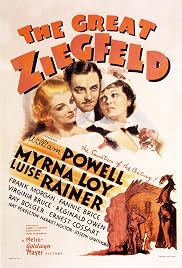
The Great Ziegfeld (1936), 8-

The ups and downs of Florenz Ziegfeld Jr., famed producer of extravagant stage revues, are portrayed.
(176 min; my copy is 186) Released 1936-03-22
Director: Robert Z. Leonard
Stars: William Powell, Myrna Loy, Luise Rainer
Seymour Felix  ...  stager: dances and ensembles (Oscar winner)

Biography | Drama | Musical | Romance
http://www.imdb.com/title/tt0027698/

Home of the giant wedding cake spiral staircase, perhaps honored in the opening of Seth MacFarlane's Ted 2 (2015). Here, the scene (23) lasts 8 minutes, and the featurette said it was one take (I saw a cut during the Pagliacci moment, but only one), and cost more to produce than an actual Ziegfeld show! This is mostly a revolving tableau, with some dancing in pockets. (Ted 2 has a lot of dancing to Steppin' Out With My Baby, song from Easter Parade, danced by Fred Astaire with special effects but no wedding cake. Ted 2 had 100+ dancers, according to Seth's video commentary at a NYT article.)

In addition to Felix's Best Dance Direction Oscar for A Pretty Girl Is Like a Melody, Luise Rainer earned her first of 2 consecutive Oscars for Best Actress, and the film won Best Picture. Here are all the nominees; this film was nom'd in 4 other categories. (For more on Oscar records.)

This is a roadshow version, with a 5 minute overture before credits, intermission footage, and exit music.

Ray Bolger's dance (starts at scene 26) could be his audition for the Scarecrow of The Wizard of Oz (1939). This flows into other songs, including a chorus of 20 dancing on beds (scene 28), more showgirls culminating in a revolving 45 degree tilted disc (scene 29) of girls arranged into a stylized peacock(?).

One of the treasures here is 4 scenes (beginning at 32) with Fanny Brice, herself, not an imitator. (Boy, Streisand was a great choice to play her in Funny Girl (1968).) She sings part of her signature song, My Man, in scene 35.

The big circus production number starts in scene 43, with Harriet Hoctor dancing a ballet where dogs and ponies are used as props to be danced around/over.

The film gives the definite impression that Ziegfeld loved large beautiful spectacles. Previously rated 8; today I might settle on 7. But it's not so far off that I feel compelled to change it.

MGM, dir. Leonard; 8-

My post on Oscar, Best Dance Direction, 1936-38


Friday, November 10, 2017

Colleen (1936), 7+

The Ames Company makes every effort to keep Uncle Cedric away from any decisions or work. This is in the best interests for him and the company. Trouble starts when he hires a schemer named...
(89 min) Released 1936-03-21
Director: Alfred E. Green
Stars: Dick Powell, Ruby Keeler, Jack Oakie, Joan Blondell
Bobby Connolly ... production numbers created and staged by
Paul Draper ... original dances created by

Genres: Musical | Romance | Comedy* (*mine)

This is an excellent dance movie. Bobby Connolly's ensemble work is gorgeous, and complements the Paul Draper creations/executions. Ruby Keeler dances even better with Draper. What a loss to film dancing that Draper only did 2 movies!

The plot is Fashions of '34 meets Roberta meets Gold Diggers et al, and we get a musical fashion show that turns into a production number with actual dancing.

Although he's not credited, I'm reminded of BB here. Clearly he blazed the trail for the creative camera usage in musical numbers. We don't get an actual overhead shot here, but very high camera angles let us enjoy the mass movement far more than stage-level visuals do,

Jack Oakie adds his flavor of humor, playing off Joan Blondell and Hugh Herbert well. This is another writing credit for Herbert.

The chocolate candy workers will remind everyone of the I Love Lucy episode, although no assembly line here. Interesting that they state company policy is workers can eat as much candy as they like. I wonder in how many factories that was/is true.

For anyone reading these sequentially: yes, I give this a higher rating than Follow the Fleet. I don't remember any ensemble dancing there (although Pan gets credit for staging ensembles!) Here is a nice balance of ensemble, pair and solo routines. And although we have too many couples here too, most were with comic characters I like. We had only F&G to provide comedy in FtF. (Lucy wasn't funny in her scenes. Her career progress is slow.)

Although we get a DP song before this, the biggest problem is that it takes 30 minutes to get our first dance, I Don't Have to Dream Again. They tell a complete story with dance, even tapping some "dialog"; is this dance-o-mime? Blondell and Oakie do a pretty and funny little pas de deux. We also get a duet sung by DP and RK. The only other big number, You Gotta Know How to Dance, starts at 1:19:20 and finishes the film. Together, the 2 big numbers take about 20 minutes of the 1.5 hour film. Unfortunate that I can't find a credit for the child dancer who assists DP behind a bandstand.

Warner Bros, dir. Green, 7+

Follow the Fleet (1936), 7

A Navy sailor tries to rekindle a romance with the woman he loves while on liberty in San Francisco.
(110 min) Released 1936-02-20
Director: Mark Sandrich
Stars: Fred Astaire, Ginger Rogers, Randolph Scott, Harriet Hilliard Nelson
Hermes Pan ... ensembles stager

Comedy | Musical | Romance
http://www.imdb.com/title/tt0027630/

I was surprised when I saw I'd already rated this an 8. But I rated 150+ films on 2 Jan 2006, so it likely was not a considered opinion having just watched the film.

Next time, try watching only the musical numbers first. The movie suffers from many problems:

  • high expectations given Top Hat (1935) and The Gay Divorcee (1934), but remember the other 2 weren't as great.
  • lack of comic support. No one like Eric Blore, E.E. Horton or Helen Broderick here.
  • too many couples. Harriet Hilliard pursues Randolph Scott pursues Astrid Allwyn. Yeah, Randolph Scott, who pursued Irene Dunne in Roberta (1935). And F&G, of course.
  • lack of glamorous clothing. Only the last number, Let's Face the Music and Dance, has Astaire in tux (and Rogers in one of her best ever gowns. The dance has pauses to let the gown wind and unwind around her legs. Great!) There were other good gowns here, but Ginger dances in a satiny sailor suit outfit, shiny fringy audition/rehearsal clothes, and casual street clothes. Fred is always in a sailor uniform, except LFtMaD. 
  • characters played by F&G already knew each other before the film began. I didn't like that in Roberta either. Their best dances are the seduction scenes, where she resists him but his dancing persuades her. Dancing like buddies is nice, but the transition from no to yes is best.
  • lack of glamorous settings. The dime-a-dance hall is likely prettier than similar places, real or imagined, especially since ALL clientele are sailors. And Ginger & Harriett's home is amazing for a dance hall hostess and a music teacher. Plus we visit Astrid's mansion. But the ship is naval, not luxury cruise. This is the least glamorous of the first 5 F&G films.
  • Betty Grable appears too briefly. 
  • Fred chews gum too much. Did he watch a camel to get the technique?
  • It's kinda long (1:50).
The positives:
  • F&G do a lot of dancing, each alone, and together, and it's spread throughout the film
  • Lucille Ball acts. She's a fellow dance hall hostess, and speaks many lines. Plus she mugs like you'd expect of someone in her profession, and we get to see the upper lip double curl that she used to so well in I Love Lucy and elsewhere. Both she and Grable appear on the cast title card, Grable in the middle, Ball at the end. Obviously not based on screen time in the final cut.
  • Harriett sings a couple of songs. Not the greatest voice, but good stuff.
  • All songs are by Irving Berlin.
    • We Saw the Sea (FA)
    • Let Yourself Go (GR)
    • Get Thee Behind Me, Satan (HH)
    • Let Yourself Go (F&G)
    • I'd Rather Lead a Band (FA)
    • But Where Are You? (HH)
    • I'm Putting All My Eggs in One Basket (F&G)
    • Let's Face the Music and Dance (F&G)
Tony Martin supposedly appears as a sailor. He stars in the 1955 remake, Hit the Deck.

Because of Let's Face the Music and Dance, I'll give it a 7. 

RKO, dir. Sandrich, 7


Thursday, November 9, 2017

Klondike Annie (1936); 6

Carlton Rose, a girl known as "the Frisco Doll" escapes to Alaska after accidentally killing her guard.
(80 min) Released 1936-02-21
Director: Raoul Walsh
Stars: Mae West, Victor McLaglen, Phillip Reed

Genres: Comedy | Drama* | Music* (*mine)
http://www.imdb.com/title/tt0027851/

Mae West plays her usual character - savvy man-manipulating entertainer, but repents for a while - or does she adopt her new persona to hide from the law? And does it matter? Don't we watch her movies to see her? Unfortunately, while she's in disguise, we don't get her usual fabulous gowns and jewels; she still manipulates men, but not with the usual sexual aggression.

We finally get an established actor who is an appropriate partner for her: Victor McLaglen (b. 1886). His virility matches her strong femininity, and the actor is 7 years older than MW (b. 1893). Her other love interest, Phillip Reed (b. 1908) who echos Cary Grant in She Done Him Wrong and I'm No Angel (both 1933), is a another handsome policeman; the actor is 15 years her junior.

The plot is strange; we don't discover until 23 minutes in that she murdered someone before leaving San Francisco (about 13 movie minutes ago), although she doesn't confirm or deny it. And we don't learn who she murdered until 79.5 minutes, when we hear "the house of Chan Lo must be avenged." (Chan Lo was the man keeping Rose (MW) in the opening reel.) Is this due to missing footage? (IMDb says 80, both prints I have is 76.5 minutes.) Censors? Deliberate obfuscation?

Rose is saddened by the death of fellow passenger Annie, but the arrival of police looking for her motivates Rose to quickly switch identities with Annie. When she goes ashore to meet Annie's party (those running a settlement house), she hears Annie's purpose and decides to stay in her new character "to pay a debt to Annie."(Debt? Promise maybe.) Rose's showbiz savvy makes a success of the settlement house. She even preaches from the good book Annie gave her, "Settlement Maxims." When she finally leaves town, she carries the book with her.

Paramount, dir. Walsh; 6

Rose-Marie (1936); 8

Opera singer (Marie de Flor) seeks out fugitive brother in the Canadian wilderness. During her trek, she meets a Canadian mountie (Sgt. Bruce) who is also searching for her brother. Romance... 
(113 min) Released 1936-01-28
Director: W.S. Van Dyke
Stars: Jeanette MacDonald, Nelson Eddy, Reginald Owen
Chester Hale ... stager: totem pole dance

Musical | Romance | Adventure | Drama | Western
http://www.imdb.com/title/tt0028207/

Allan Jones sings a bit of opera with JM. They stage many scenes briefly; I long for more. In a very small part, David Niven (misspelled plural) earns his 9th film credit (5 uncredited.)  Strange to see Robert Grieg in shabby clothes and hair askew; usually he's the natty butler, but here he's the manager of a rustic inn.

Jimmy Stewart plays the fugitive brother; his second film credit. Someone needed to tell him to let the camera see his face, even though the head-down approach does fit the character. I rather wished we learned more about the brother's fate. Marie's loyalty to him conflicts well with her attraction to his hunter, but is not mentioned after JS leaves the screen.

Most of the movie takes place in rustic Canada (filmed in California); we only see an automobile briefly in an early scene. Horses are the primary transport, hence the Western genre. Also, we see a gathering of Indian tribes, with a large ensemble dance number, attempting realistic tribal dancing, not stylized Hollywood interpretation. Then again, the credited dance director has ballet/Broadway/Ice Capades as his CV, including Reckless and A Night at the Opera (both '35), so maybe I'm being generous. After all, that giant drum doesn't seem so authentic.

This is the home of the Indian Love Call and the title song, among others. JM and NE have gorgeous voices. NE's "wooden" nature plays well for these stoic characters (the Union mercenary in Naughty Marietta, the Canadian Mountie here), and he does have a variety of facial expressions. JM is beautiful and acts up a storm.

So we have beautiful 1) scenery, 2) leading players, 3) music and 4) Native American dancing. What pushes this to an 8 is the use of Tosca: both musically and thematically. Cavaradosi's death scene blends well with the Indian Love Call reprise. And then JM acts the final scene VERY well.

I remember both Sweet Mystery of Life (from NM) and Indian Love Call being used elsewhere mockingly, in parody. But they both originated in sincere movies and were well-executed vocally and dramatically. Those parodies kept me from seeing these movies until now. That's a shame. Similar mocking of Frank Capra"corn" (and other such) has helped us become a cynical society that doesn't believe anyone can sustain sincerity. (I'll leave it to the reader to check the posting date with American history, and think what might have prompted that remark. I don't want to sully this post with real-life present-day names.)

MGM, dir. Van Dyke; 8


Wednesday, November 8, 2017

Anything Goes (1936), 6+


A young man falls in love with a beautiful blonde. When he sees her being forced onto a luxury liner, he decides to follow and rescue her. However, he discovers that she is an English ... 
(92 min) Released 1936-01-24
Director: Lewis Milestone
Stars: Bing Crosby, Ethel Merman, Charles Ruggles, Ida Lupino, Arthur Treacher
LeRoy Prinz ... choreographer

Comedy | Musical

Nice collection of Cole Porter tunes: Anything Goes (partial),
I Get a Kick Out of You, There'll Always Be A Lady Fair, You're the Top. Plus 4 from other composers.

The Avalon Boys quartet act as crew men, and include Chill Wills, whose singing voice is as sweet as his speaking voice.  The Quartet has 2 actor credits and 2 more soundtrack credits, but 6 films total (1 with credits individually only, and 1 without mentioning Avalon Boys at all).

I was surprised to see a credited choreographer, but there is a tiny bit of tapping by several girls when Reno (EM) boards the ship, and a limited production number when she disembarks toward the end of the film. Have they been aboard ship?

The story is a pleasant puff of fluff. Great to have Charles Ruggles (sans mustache!) and Arthur Treacher to add comedy. Ruggles, as the gangster on the lam, gets lots of ignoramus vocabulary jokes.

Ida Lupino displays almost no personality, but that's likely how the role is written. This is her 14th film (only 1 uncredited, otherwise as a character with a name). I remember seeing Search for Beauty (1934) where her character had more to do and emote.

Margaret Dumont has a too small role. Philip Ahn and Key Luke play Chinese who gamble well (craps on the floor), and speak-ee with an "accent".

My bootleg print is rather soft focus, but not worth buying an official version if it ever gets released.

Paramount, dir. Milestone; 6+

Strike Me Pink (1936); 7-

Meek Eddie Pink becomes manager of an amusement park beset by mobsters. 
(100 min) Released 1936-01-16
Director: Norman Taurog
Stars: Eddie Cantor, Ethel Merman, Sally Eilers
Robert Alton ... director: dances and ensembles

Comedy | Musical
http://www.imdb.com/title/tt0028321/

Wow, so much to write about! I still don't care for EC, but this one has LOTS to like: Ethel Merman, Robert Alton, Dona Drake and Sunnie O'Dea, plus the special effects and stunts.

Merman is gorgeous, dressed to the teeth (actually, through to the hat), sings THREE numbers, and doesn't overdo the vocals. She also gets to act, helping the bad guys manipulate Pink (EC).

Robert Alton makes his debut as dance director, and it's eye-popping! When Dona Drake lets loose during The Lady Dances, I thought she was Joan McCracken, but Good News (1947) is too far hence. It wasn't just the face, but the way she moved that reminded me of JM. During Shake It Off with Rhythm, Sunnie O'Dea dances with her reflection on the shiny black floor, while backed with a male dance chorus. So when the screen splits, and her reflection goes a different way, those men had to be very still to match their reflections - or was that another optical effect? The screen splits and rejoins twice. Then they use the reflective floor to another good effect with, um, double chorus girls. It's gorgeous to look at, plus good dancing. (Of Alton's 25 musical films, I own 24, and the missing one is not released. I never deliberately collected Alton. My ratings are 6, 7 or 8, mostly 7. And I'm not that generous.) I hope I run into a featurette about him. (Total sidebar: what happens after a movie to dozens of identical chorus girl gowns?)

Title card: "Dances and Ensembles Photographed by Gregg Toland, High and Low Number Photographed by Merritt Gerstad, Special Effects Photographed by..." Toland, famously filmed Citizen Kane (1941), has credits starting in 1926; lived 1904-48. Gerstad was also the primary cinematographer for the film. The High and Low number has lots of cuts (some bits are one word long) and artsy camera angles. How much of that is Gerstad vs. director Taurog? Also, the lighting of that number is so dark it made me wonder if they were trying to hide the ethnicity of the ensemble (all black). Gerstad lived 1900-1974, but his last IMDb credit was 1945; no biography to explain his exit.

Special effects are not limited to the split screen dance; we have some rear projection and stunt work that rivals the most adventurous silent comedian. In the trivia section we get "Clarence Budington Kelland wrote his story as a vehicle for Harold Lloyd."  Yup.

The non-musical and non-stunt majority of the film is skippable. But fastforward (not chapter-skip) to watch for the good stuff. Edward Brophy's brief dance to a bit of La Gioconda, and why he does it, is worthwhile.

Next viewing: look for dance duo Carol Chilton and Maceo Thomas, and note here the time of their appearance.

Goldwyn, dir. Taurog [+R.Alton], 7-


Tuesday, November 7, 2017

King of Burlesque (1936); 6+

Former burlesque producer moves into legitimate theatre and does well until he marries a socialite. After his divorce his former top singer returns from London to help out. 
(90 min) Released 1936-01-03
Director: Sidney Lanfield
Stars: Warner Baxter, Alice Faye, Jack Oakie
Sammy Lee ... dance ensembles; Oscar nom'd, see below

Drama | Musical
http://www.imdb.com/title/tt0026571/

Oscar nominated (Dave Gould won; nominees), Best Dance Direction, Sammy Lee, for Lovely Lady (ensemble) and Too Good to be True (Dixie Dunbar and male chorus, portion enhanced by Fats Waller and his band, and yes, they're completely extractable, although that would also cut Dunbar's dancing in half). Also excellent: Nick Long (high kicker from Broadway Melody of 1936 (1935); he does a lot of leaping and high-hopping here too, again reminding me of Bobby Van in BB's Small Town Girl (1953). Gareth Joplin (child with Astaire's forehead and hairline) has only 1 other IMDb credit. Both NL and GJ dance separately with female chorus on Shooting High.

Alice Faye dances and sings, plays the star and dance director of the shows. Her 8th film, my 4th. Musical numbers are distributed nicely throughout the film. Jack Oakie could have been used more.

My bootleg copy is completely adequate; can't imagine an official release being much better quality. Very tempted to rate this a 7, but it lacks something to push it over the edge.

Fox, dir. Lanfield; 6+

My post on Oscar, Best Dance Direction, 1936-38


Recap: where are musicals by the end of 1935?

The quick answer is that they've matured. I have evidence for all but 2 of the 8 major studios (Columbia, Fox, Warner, Paramount, Universal, MGM, UA, RKO) that they each have produced at least one good musical. (Italicized are those lacking evidence. Columbia really doesn't devote much effort to musicals in general: later they'll have Ann Miller under contract in her early years, and make B pictures with her; fortunately she transfers to MGM. Rita Hayworth becomes their star, and she does maybe 10 musicals, but few the caliber enjoyed by women at the studios that DO focus on musicals during her career. Universal is one of the studios I can't really track without a better database tool. IMDb's search recognizes any film that Universal has ever owned as theirs, and they bought 700 films from Paramount in 1958. Likewise all the mergers of MGM/UA/RKO/Warner inventory has muddied the MGM data, and IMDb has no way for me to select RKO or UA films anyway. So for most studios I can only track the titles one at a time.)

So here are the musicals I find worthwhile for the years 1927-35. I eliminated any that I rate highly for non-musical reasons. They have to satisfy at least 2 of the 3 basic criteria: good Singing/music, good Dancing, good story/Characterization.

The Jazz Singer (1927, Warner Bros); 7, SC; Al Jolson [drama]
Hallelujah (1929, MGM); 7, SC; Nina Mae McKinney & all-black cast,  [drama]
The Great Gabbo (1929, indie); 7, DC; Eric von Stroheim [drama]
The Love Parade (1929, Paramount); 7, SDC; Maurice Chevalier, Jeanette MacDonald, Lupino Lane
Monte Carlo (1930, Paramount); 7, SC; Jeanette MacDonald
Love Me Tonight (1932, Paramount); 8+, SC; Maurice Chevalier, Jeanette MacDonald
Hallelujah I'm a Bum (1933, UA), 8, SC; Al Jolson [drama]
42nd Street (1933, WB), 8+, SDc; Busby Berkeley (42nd Street)
Gold Diggers of 1933 (1933, WB), 8, SDC; Busby Berkeley, Joan Blondell (My Forgotten Man)
Footlight Parade (1933, WB), 8, SDC; Busby Berkeley, James Cagney (Shanghai Lil, By a Waterfall)
Wonder Bar (1934, WB); 8, SDC; Busby Berkeley, Al Jolson (Goin' to Heaven on a Mule) [drama]
Evergreen (1934, Gaumont British), 7, SDC; Jessie Matthews (time survey in song/dance)
Dames (1934, WB); 7+, SD; Busby Berkeley (I Only Have Eyes for You)
The Gay Divorcee (1934, RKO); 8+, SDC; Fred Astaire, Ginger Rogers (Night and Day)
Folies Bergere de Paris (1935, 20th Century); 7, SDC; Maurice Chevalier, Ann Sothern (Rhythm of the Rain)
Naughty Marietta (1935, MGM); 7, SC; Jeanette MacDonald, Nelson Eddy
Gold Diggers of 1935 (1935, WB); 7-, SD; Busby Berkeley (Lullaby of Broadway)
Top Hat (1935, RKO), 10, SDC; Fred Astaire, Ginger Rogers (Cheek to Cheek)
Broadway Melody of 1936 (1935, MGM); 7+, SD; Eleanor Powell, Buddy & Virna Ebsen (Broadway Rhythm)
The Littlest Rebel (1935, 20th Century Fox), 8, DC; Shirley Temple, Bill Robinson (various) [drama]

And now for some statistics. Let's review by Studio. Through 1935,
  • According to IMDb, Columbia has produced a total of 18 Musicals; I watched none of them during this quest.
  • Fox Films + 20th Century Productions » 20th Century Fox in '35: 11 Musicals. I watched 8, including 4 Shirley Temple.
  • Warner Bros + First National: 75 Musicals produced; 16 watched, including 8 BB (with Busby Berkeley dance #s.)
  • Paramount Pictures: 84 Musicals produced; 26 watched
  • Universal Pictures: unknown produced; 0 watched
  • Metro-Goldwyn-Mayer: unknown produced; 13 watched, including 1 BB
  • United Artists and independents: unknown produced; 5 watched
  • RKO Radio Pictures: unknown produced; 8 watched
  • Goldwyn: unknown produced; 5 watched, including 4 BB; notice none appeared in the list above
  • various British prods: unknown produced; 6 watched
Here's how all my 3400+ ratings distribute.
  • 10s: 0%
  • 9s: 2%
  • 8s: 9%
  • 7s: 23%
  • 6s: 49%
  • 5s: 15%
  • 4s: 2%
87 pre-1936 Musicals (or Music) watched. Ratings; surprisingly similar to overall (above):
  • 1 rated 10 (Top Hat) [1%]
  • 1 rated 9 (Duck Soup, but not for its musicality) [1%]
  • 9 rated 8 (4 with +) [10%]
  • 24 rated 7 (3 with +, 11 with -) [28%]
  • 42 rated 6 (18 with +, 11 with -) [48%]
  • 10 rated 5 (1 with +, 5 with -) [12%]
31 of these I deem as musicals with worthwhile dancing; 31 is kind of a small number, and it would make sense that "worthwhile dancing" films will get higher scores, but I know I put some films on this list that I advised myself just to skip to the dancing:
  • 1 rated 10 [3%]
  • 6 rated 8 (2 with +) [19%]
  • 10 rated 7 (2 with +, 5 with -) [32%]
  • 12 rated 6 (7 with +, 2 with -) [39%]
  • 2 rated 5 (1 with -) [7%]
Chronologically:
  • 1927 [1 film] rating: 7
  • 1928 none
  • 1929 [11 films] ratings:57657576676, average 6.1
  • 1930 [ 9 films] ratings: 665767656, average 6.0
  • 1931 [ 4 films] ratings: 6766, average 6.25
  • 1932 [ 6 films] ratings: 767856, average 6.5
  • 1933 [13 films] ratings: 6885868696767, average 6.9
  • 1934 [19 films] ratings: 6685756666766786666, average 6.3
  • 1935 [24 films] ratings: 7767765676766677X7666868, average 6.7
  • average overall: 6.45 versus IMDb user avg 6.9 for these, versus 6.3 average for all my ratings