Saturday, February 17, 2018

The North Star (1943), 6+ {nm}

A Ukrainian village must suddenly contend with the Nazi invasion of June 1941.
1h 48min | Drama, Romance, War | 4 November 1943
Director: Lewis Milestone
Stars: Anne Baxter, Dana Andrews, Walter Huston, Walter Brennan, Jane Withers, Farley Granger, Erich Von Stroheim.

https://www.imdb.com/title/tt0036217/
watched on AmazonPrime, also on a megapack; poor print quality.

First film credit for Farley Granger (b. 1925); he definitely looks young, more like 16 than 18. But his voice is already there.

Tommy Rall is supposed to be among the dancers (they do that strenuous squat-kicking), but I didn't even try to spot him once I saw how fuzzy the print was. He'll still be a teen (b. 1929).

I would give this a recommended rating if I'd seen a good print. But it's gruesome. Nazis bombing and strafing civilians, using children for forced blood transfusions until they die. Half the characters we meet are killed or badly wounded. They destroy their own homes, crops, livestock so the Nazis can't benefit from it.

But showing the US citizens some of the horrors of war is good motivation for us to support our efforts to fight and end the war, to feel positively toward the USSR as our ally, and to enlist in some branch of the service, volunteerism, or war production job.

The cast list that I've included indicates we're in good hands, and indeed the acting is good. Despite the dark and blurry print, Jane Withers' fear and courage were palpable. I suspect the Aaron Copland music helped, but I didn't notice it, which can be a good sign (it wasn't intrusive.)

It's a good film, but I hope I never want to watch it again. It's easier reading about atrocities than watching them, even when you know "it's only a movie."

Goldwyn, distr. RKO, dir. Milestone; 6+

The Heat's On (1943), 6

When his biggest star joins a rival's show, a Broadway producer bluffs and schemes to get her back.
1h 19min | Musical, Comedy | 2 December 1943
Director: Gregory Ratoff
Stars: Mae West, Victor Moore, William Gaxton, Hazel Scott, Xavier Cugat.
David Lichine ... choreographer

https://www.imdb.com/title/tt0035978/

Mae West's 12 films were released in: '32, '33, '33, '34, '35, '36, '36, '37, '40, '43, '70, '78. She had writing credit on 10 of them; not this one. This is her film first away from Paramount. On IMDb, Other Works for her includes her return to live theatre in the '40s.

Although she didn't write this, and isn't onscreen as much as in her Paramount films, MW does bring her spice to her role. She only sings twice, and the second time (brief finale) she is filmed mostly from afar, and can barely be heard singing with the male chorus. She gets a couple of closeups in that finale, where she sings without the chorus, and gives us the lyric "If you want things put in order, come and see me, south of the border." Sounds like her writing there. (The IMDb page for this film has 3 photos of MW in a costume I didn't see in the film.)

VM seems to get the most screentime, and he's his usual mild-mannered funny sweetypie. At one point he says to MW (b. 1893) that he (b. 1876) was over 40. His inflection on "over" is a confession that he's Far over.

After MW and VM, Hazel Scott is the best thing about this film (and among the best in I Dood It). During her first number, she plays 2 piano simultaneously, and one of them has black/white keys reversed in color. In her 2nd number, she plays some of the number standing up and with her back to the keys. But I think I'm most impressed by her playing the basic melody of Caissons with her left hand while standing and looking away while acting. She plays with pianos like a guitarist who plays the guitar behind his head. Sure enough, her IMDb bio says she was a child prodigy.

Songs performed (official release, no menu, 8 chapters, 10 min each)

  • ch1. I'm Just a Stranger in Town (1943), Performed by Mae West in the show "Indiscretions" 
  • ch2. Unidentified Song, Performed by Xavier Cugat and His Orchestra and Lina Romay in Spanish 
  • ch3. There Goes That Guitar (1943), Performed by Joan Thorsen and David Lichine (uncredited) 
  • ch4. Antonio, Performed by Lina Romay and Xavier Cugat and His Orchestra 
  • ch5. The White Keys and the Black Keys (1943), Performed by Hazel Scott 
  • ch5. Thinkin' About the Wabash (1943), Performed by Mary Roche, Jack Owens and chorus 
  • ch7. Caisson Song (1907), Performed by Hazel Scott and all-black chorus, men in army uniforms with rifles
  • ch7. They Looked So Pretty on the Envelope (1943), Performed by Victor Moore 
  • ch8. Hello, Mi Amigo (1943), Performed by Mae West and chorus in the show "Tropicana" 

I don't understand the low ratings here. But I know I've developed a tolerance for bad films so long as they have enough music. This one is borderline, but my comments above the song mean I foudn enough to like.

Columbia, dir. Ratoff; 6

Harvest Melody (1943), 6-

Farmer Tommy and his girl Jane come in from the country for a night at the Hollywood Trocadero. There, they meet Chuck, Hollywoods Number One press agent, and his Girl Friday, Daisie. ... 
1h 10min | Music, Romance, War | 22 November 1943
Director: Sam Newfield
Stars: Rosemary Lane, Johnny Downs, Charlotte Wynters, Sheldon Leonard.

https://www.imdb.com/title/tt0035972/
Watched online, poor/blurry print (hard to recognize RL).

RL plays an actress freshly released from her studio contract. SL is her (press) agent, who meets a farmer in need of labor. So SL's gal feeds him the idea of having his clients help at the farm for publicity. It turns into a national movement of people helping at farms. "Food is the ammunition that will win this war." Apparently volunteering was a part of the solution to labor shortages, but I don't find any mention of it being widespread in my quick internet search. Here's an article from University of Nebraska, Lincoln about farming on the Great Plains during the war. Also found info on the bracero program on Wikipedia.

SL's clients, including a band, perform during off-hours to entertain themselves and lighten the load. (This being a musical, music also plays while 2 people are bicycling (process shot) and singing out "on the road.") To promote the national movement, they do a radio broadcast from the barn. Soundtracks on IMDb is blank, and I have no way to add any of the many songs, the names of which are unknown to me.

SL is his usual personality, heavy NY accent, shifty but not a gangster here. I like him, especially his 2 versions of Nick the bartender in It's a Wonderful Life ('46). In addition to his 69 film credits, he became a TV mogul, credited as Producer for Make Room for Daddy ('53-'64), The Dick Van Dyke Show ('61-'66), The Andy Griffith Show ('60-'68), I Spy ('65-'68) and Gomer Pyle: USMC ('64-'69) among others.

This is another movie that refers to Hitler as Schicklgruber, birth name of Hitler's father who was born out of wedlock and later changed his name to Hitler, a form of Heidler, his birth/step father's name. It was never Hitler's name.

I'm glad to have watched this for another insight to the homefront during the war, but especially without a decent print, I can't recommend this.

Walter Colmes Productions, distr. PRC, dir. Newfield; 6-

Sweet Rosie O'Grady (1943), 6 Color

Music-hall star Madeleine Marlowe leaves London engaged to the Duke of Trippingham only to find back home that Police Gazette hack Samuel A. McGee has exposed her as former burlesque queen ... 
1h 14min | Musical | 1 October 1943 | Color
Director: Irving Cummings
Stars: Betty Grable, Robert Young, Adolphe Menjou, Reginald Gardiner, Virginia Grey, Phil Regan.
Angela Blue ... assistant choreographer
Hermes Pan ... dance director
Ruth Fanchon ... supervisor of musical sequences (as Fanchon)

bootleg, slightly blurry.

How to avoid the war: set the story in the 1880s. Although the final title card was the ad to buy war bonds. (Did people have those things lying around the house?)

In the Tap! Appendix for Betty Grable, Hermes Pan who partner dance onstage again, HP looking even more like Astaire than usual (facial expressions), and stealing the leg-hurdle dance segment from The Story of Vernon and Irene Castle ('39) where he's credited as dance director. Here, HP puts his foot on a short wall; FA put his on dinner tables in a restaurant. The camera work was better at RKO, and Ginger was dancing exuberantly, not just expertly.

Song/dance (13 chapters of 5-6 min each):

  • ch1. Where, Oh, Where Is the Groom? sung/pranced onstage by BG and chorus/ensemble in production.
  • ch4. Phil Regan, as a songwriter, sings a new song, My Heart Tells Me (Should I Believe My Heart?), to BG in her living quarters. She sings it a 2nd time. She's in the tub in the next room the whole time.
  • ch6. PR sings The Wishing Waltz onstage in production, ensemble dancing, then BG & HP emerge, waltz out to the patio, where eventually they do the leg-hurdle 6 times and waltz back to the dance floor. They do NOT tap, and this is his only appearance. This dress especially looks like a bustier with a skirt, all one color, and the skirt is sheer. 1980's Madonna would be proud.
  • ch7. BG sings My Heart Tells Me (Should I Believe My Heart?) in the burlesque beer hall where she started. (Reporter RY brought her there to take photos.)
  • ch10. Newsboys sing Get Your Police Gazette onstage in production, then Sweet Rosie O'Grady. Leads to:
  • ch11. Enter BG, bantering with reporters, then sings Sweet Rosie O'Grady with them, strutting the stage. They all tap a little during their dance.
  • ch12. BG and chorus onstage: Goin' to the County Fair. She taps a little with a couple of partners.
  • ch12. BG sings to man in RY mask onstage: My Sam 

I don't like the escalating deceits by RY and BG against each other. And then they seemingly end up together. Not a healthy relationship. How about for conflict a little you-and-me against the world instead of against each other? This may be closer to a 6- than just a 6. The color and BG's gowns help.

Fox, dir. Cummings; 6

Thank Your Lucky Stars (1943), 5

Two producers are putting together a wartime charity show with an all-star cast but the egotism of radio personality Eddie Cantor disrupts their plans.
2h 7min | Comedy, Musical | 25 September 1943
Director: David Butler
Stars: Eddie Cantor, Dennis Morgan, SZ Sakall, EE Horton, Joan Leslie and dozens of Warner stars as themselves.
LeRoy Prinz ... dance numbers created and staged by (as Leroy Prinz)

Watched online; good print.

1st of 9 films for Dinah Shore.

It's a revue with a plot. Eddie Cantor in a dual role as himself and as an actor wannabe who can't get work because he's a dead ringer for EC. But that resemblance helps him get work for his friend DM.

Stars in order of appearance:
  1. Dinah Shore sings the title song with an orch on a radio broadcast.
  2. Cuddles Sakall & EE Horton as producers who want to sign DS for their charity show, but she's under contract to EC, and they don't want him.
  3. Don Wilson as the radio show MC.
  4. John Garfield sings Blues in the Night customized for his tough-guy persona, and EC as his choking victim.
  5. EC sings Now's the Time to Fall in Love, and we meet his other self on the street, soliciting  movie star tour passengers.
  6. Dir. David Butler & Prod. Mark Helinger talk as themselves with ~EC on the street.
  7. Dennis Morgan plays a character in the story, meets ~EC on the street.
  8. Joan Leslie as a songwriter wannabe meets her & DM's crooked agent as he's skipping town.
  9. Spike Jones and his City Slickers perform a novelty version of Ochi Tchornya (which MUST have been in public domain, since it's used a LOT) in Gower Gulch, a Hooverville for the H'wood aspirants, built from discarded movie sets. (Per Wikipedia, GG is the nickname for the intersection of Sunset Boulevard and Gower Street in Hollywood.)
  10. JL does an excellent impression of Ida Lupino for DM. Her Cagney impression is not great.
  11. DM, JL perform with Spike Jones et al: I'm Riding for a Fall 
  12. Mike Mazurki as EC's trainer, doing his exercises for him. Cuddles & EEH approach EC for DS's services, and EC sings We're Staying Home Tonight to sell them on his services.
  13. Jack Carson and Alan Hale sing/dance I'm Goin' North. Yes, AH dances, sort of. Dress rehearsal.
  14. Ann Sheridan and chorus girls sing Love Isn't Born (It's Made) in dress rehearsal.
  15. DM, JL sing No You, No Me at restaurant.
  16. Humphrey Bogart acting tough gets out-toughed by Cuddles.
  17. DS sings The Dreamer as a farmgirl in dress rehearsal.
  18. Hattie McDaniel, Willie Best, Rita Christiani, Jess Lee Brooks and others perform Ice Cold Katy.
  19. Ruth Donnelly plays a nurse in a mental hospital with EC as an accidental patient.
  20. DS sings How Sweet You Are in performance as 1861 belle saying goodbye to soldier beau. Ensemble dancing.
  21. Errol Flynn sings/prances That's What You Jolly Well Get with others in merchant marine pub, which brags about his (likely false) war exploits. In performance.
  22. Bette Davis sings They're Either Too Young or Too Old in performance visiting a nightclub. 
  23. The Dreamer reprised by Ida Lupino, Olivia de Havilland (dubbed by Lynn Martin) and George Tobias as hep cats.
  24. Good Night, Good Neighbor sung by DM, danced adagio by Alexis Smith, Igor Dega and Arnold Kent 
  25. ~EC imitates EC in the show, songs are reprised.
Previously rated 4 on 3 Jun 2014. I've acquired a tolerance/taste for Eddie Cantor from this quest. It likely helped to document the stars/scenes today; when I enjoy a musical, I have to do this task in ffwd after watching the film. Without the documentation distraction, I'm sure this film would be pretty tedious. I really don't like non-musical people crossing into musical territory. I prefer professionals doing what they've trained to do. I'll bump it up to 5 for now.

Warner, dir. Butler; 5

Friday, February 16, 2018

I Dood It (1943), 6+

A bumbling pants presser at an upscale hotel's valet service nurses an unrequited crush on a Broadway star. He gets more than he bargained for when she agrees to marry him, to spite her womanizing fiance, and encounters Nazi saboteurs.
1h 42min | Romance, Comedy, Musical, Thriller | September 1943
Director: Vincente Minnelli
Stars: Red Skelton, Eleanor Powell, Sam Levene.
Bobby Connolly ... dance director
Eleanor Powell ... choreographer (Lasso dance sequence) (uncredited)


Minnelli's next film (2nd credit as full director) after Cabin in the Sky ('43). John Hodiak's 2nd film credit; spoiler: he's the saboteur.

EP marries Glenn Ford in October; her son is born in '45. She was definitely phasing out of films already in '43. In Thousands Cheer she had only a specialty; here 2 of her numbers are extracted from prior films. In Sensations of '45, at least part of the movie is a revue, and in Duchess of Idaho ('50) she appears as herself in an Esther Williams film. 

Dances/songs (official release, 11 chapters are at 10 min intervals):
  • ch1. Jimmy Dorsey & orch w/singers opens the film.
  • ch1. EP dances with rodeo rope tricks (impressive)
  • ch3. EP & RS do some comedic social dancing where they take over the floor.
  • ch4. more JD & orch w/ Bob Eberly & Helen O'Connell
  • ch7. Joe's dream of a hula/tap dancing Connie is the "Hola E Pae" part of the Hawaiian medley lifted from Honolulu (1939) 
  • ch7 (almost 8). Hazel Scott and combo play Taking a Chance on Love (beautiful)
  • ch8. Lena Horne with HS combo and chorus sing Jericho (a 1919 song! but modern arrangement). Lena's hair is the best 40's 'do I've seen so far, more timeless than others of that wrapped style. All are dressed to the teeth (gowns/furs/tuxedos) for this audition.
  • ch10. the finale is a shortened edit of the "Swingin' the Jinx Away" routine lifted Born to Dance (1936) set on a stylized white battleship with dozens of musician/sailors.
We get a pretty good fight scene between RS & Hodiak before the finale. But the fact that only 1 dance number is original (and it's mostly rope tricks) diminishes the rating, although LH & HS enhances it.

MGM, dir. Minnelli; 6+

Wintertime (1943), 7+

Nora and her uncle get railroaded into spending the night at a broken-down hotel in Canada. After Nora falls for the handsome owner, she convinces her uncle to invest in the inn and ... 
1h 22min | Comedy, Musical, Romance | 17 September 1943
Director: John Brahm
Stars: Sonja Henie, Jack Oakie, Cesar Romero, Carole Landis, S.Z. Sakall, Cornel Wilde, Woody Herman.
Kenny Williams ... musical sequences staged by
Fanchon ... musical sequences supervised by

bootleg; slightly fuzzy copy. 

Most of the story takes place in Canada, where SH & SZS are waiting 8 weeks for their quota numbers. While there, Norway is invaded by Germany. That happened in April 1940.

Cesar Romero sings! In a big fur coat with big fur mittens and fur hat.

Skating/dancing (9 chapter stops, every 10 min):
  • ch1. CL & CR sing I Like It Here in rehearsal with WH orch.
  • ch2. WH band plays Wintertime during sleigh ride to the hotel.
  • Performance block begins:
    • ch4. SH skates with a partner in black outfit with feather skirt, cuffs, hat in performance.
    • ch4. WH orch (with a woman on trumpet) with chorus sing Dancing in the Dawn.
    • ch5. SH skates alone in military style white/silver costume.
    • ch5. SH skates with 2 partners in bird costumes, she in white, they in black. Bird-costumed chorus bookends the piece at start and finish.
  • ch7. SH & CR dance in performance.
  • ch8. SH skates in big production number (or composite of 2 numbers: floors are different) in NYC with more bird-costumed chorus.
Woody Herman's segments are very enjoyable. The skating is great, as usual.

CR does most of the heavy comedy lifting. He gets a long sequence in ch8 where he's hurriedly sneaking around the hotel in long underwear, and in ch3 he gets physical with Cuddles Sakall, plus some more. JO's comedy is mostly verbal/postural, although he does get physical (perhaps a stunt double) at one point.

The romantic polygons are complicated: CW with SH and a woman magazine editor, CR with SH and CL. Perhaps a concave hexagon with SH as the center vertex?

SH's hair color varies a lot throughout the film.

SH makes only 2 more films after this. 

With a better print, this might be an 8.

Fox, dir. Brahm; 7+

Thousands Cheer (1943), 7+ Color

Acrobat Eddie Marsh is in the army now. His first act is to become friendly with Kathryn Jones, the colonel's pretty daughter. Their romance hits a few snags, including disapproval from her... 
2h 5min | Comedy, Drama, Musical, Romance | 13 September 1943 | Color
Director: George Sidney
Stars: Kathryn Grayson, Gene Kelly, Mary Astor, John Boles.
Fred Kelly ... additional choreographer (uncredited)

http://www.imdb.com/title/tt0036432/
official release, but color offset effect visible at times.

George Sidney's 4th of 30 director credits, 17 music/musicals.

In the Tap! Appendix for Gene Kelly, Eleanor Powell.

This is a Warner Archive release, so no menu for chapters, only 13 chapters at 10 minute intervals. Here are the musical numbers and skits:

  • ch1. KG sings an aria from Traviata while Jose Iturbi conducts a full orchestra at a concert. Also a second song while JI plays piano and conducts.
  • ch3. KG sings with an army band in a performance. 
  • ch3. Novelty song I Dug a Ditch (in Wichita) by some soldiers.
  • ch4. Trapeze act by GK's family.
  • ch5. KG sings Let There Be Music to GK in an empty circus tent.
  • ch6. JI plays piano over the phone to KG.
  • ch7. GK dances with a mop while army combo rehearses that Wichita song. Yes, he does the aeroplane with seemingly a dozen turns.
  • ch8. The Show begins with big brass army band conducted by JI.
  • ch8. Mickey Rooney becomes MC (and later does impressions).
  • ch8. Eleanor Powell dances in a smallish space. (Black costume)
  • ch8. Bob Crosby orch, June Allyson, Gloria DeHaven, Virginia O'Brien sing. (Drab costumes)
  • ch9. Frank Morgan as a barber posing as a doctor during intake for potential WAVES Ann Sothern, Lucille Ball and Marsha Hunt. (mostly drab costumes)
  • ch10. Kay Kyser and his orch w/ singers reprising Wichita yet again. (drab costumes)
  • ch10. Don Loper clothes and hats (finally some bright colors) on white models in tropical makeup to a Latin beat. Chorus girls in solid bright green Caribbean costumes with a variety of hats. Then a brown evening wear dance team doing semi-adagio, eventually joined by the green chorus.
  • ch11. Lena Horne sings Honeysuckle Rose with Benny Carter band. (white gown; magenta drapes and mirrors behind her)
  • ch11. Red Skelton does a comedy routine as a soda jerk who acts out some stories to girls in bathing suits. Donna Reed is in one of the stories; her 14th film credit. Margaret O'Brien in another.
  • ch12. JI plays boogie woogie on piano with Judy Garland singing.
  • ch12. Aerialists (GK family, now with GK) perform.
  • ch13. KG sings a patriotic song with JI conducting the orch from ch1, and a huge male (not young) chorus (well over 100 men, about twice the number as orch players).
The plot involves uncooperative GK adapting from being a trapeze star to a buck private, while falling in love with the commander's daughter (KG). Sacrifice, conformity, team work, respect, obedience. I now pronounce you soldier and army.

MGM, dir. Sidney; 7+

Nobody's Darling (1943), 6-

Teens of Hollywood parents board at an exclusive school and grapple with the usual teen issues while preparing to put on a show.
1h 11min | Musical | 27 August 1943
Director: Anthony Mann
Stars: Mary Lee, Louis Calhern, Gladys George.
Nick Castle ... choreographer

Watched online, poor/fuzzy sometimes awful print.

Mostly unfamiliar faces, not even future stars among the teens. 

The plot was ok, with both the parents and the teens dealing with life changes. 

The singing was fine. Dancing: one brief audition scene near the beginning, some rhythmic movement (and a little tapping) by chorus girls in the production number performance near the end.

The songs are great here, all familiar/standards. I wonder if PovRow studios got a discount for music rights, or if they just ignored such formalities. The songs are:
It Had to Be You 
Blow, Gabriel, Blow 
On the Sunny Side of the Street 
I'm Always Chasing Rainbows 

This is Anthony Mann's 3rd of 41 director credits, 7 tagged as music/musical.

Republic, dir. Mann; 6-

Isle of Forgotten Sins (1943), 5-

The owner of a seedy dive and brothel on a South Seas island meets two treasure hunters looking for a sunken ship with a $3-million cargo of gold. She persuades them to let her in on the ... 
1h 22min || 15 August 1943
Director: Edgar G. Ulmer
Stars: John Carradine, Gale Sondergaard, Sidney Toler

Genres: Action | Adventure | Drama | Music | Romance
http://www.imdb.com/title/tt0036046/
On megapack as Monsoon.

NO idea why this is tagged Music. Soundtracks lists 3 songs with 'sung by' notations, but I don't remember much of it.

The plot is the king here, and it's a mighty small kingdom. The print is pretty bad, and might have been spliced to repair damage, otherwise the editing is very choppy.

Monsoon is the better title, because the storm effects are better than the story. Unfortunately the storm comes at the end of the film and doesn't last very long. When the sky clears, we see the top 2 billed with her old cash register. If they explained what happened to the rest of the cast, I missed it.

Not sufficiently annoying to earn a 4. But strongly recommend against wasting time on it again.

Atlantis Pictures, distr. PRC, dir. Ulmer; 5-

Thursday, February 15, 2018

Phantom of the Opera (1943), 6 Color

A disfigured violinist haunts the Paris Opera House.
1h 32min || 27 August 1943 | Color
Director: Arthur Lubin
Stars: Nelson Eddy, Susanna Foster, Claude Rains

Genres: Drama | Horror | Music | Romance | Thriller

Soundtracks lists 4 opera sequences. Only 1 is from an extant opera, the others were written for the film using symphonic music in public domain. In addition to being a thrifty studio, Universal had trouble clearing the rights to use existing operas either because their right-holder was in Europe, or because they wanted to clear the rights for distribution in Europe (or both).

It may be me today, but I found this dull. I'm not a fan of horror, so I don't know how it stacks up against horror of that time, but surely it falls flat today.

My thought in buying this: I like Nelson Eddy, I like Claude Rains, I like opera. Somehow it doesn't accumulate into liking the film.

Glad to have heard SF hit G above high C. Pretty sure she did it in one of the other films I watched with her: The Hard-Boiled Canary ('41) or Star Spangled Rhythm ('42). It's freakish, inhuman.

The featurette and the commentary track didn't help me appreciate the film, but are the source of my 1st paragraph (and naming that high note). They go into the history of film adaptations of the Gaston Leroux novel, including versions that were never made. (Deanna Durbin with Charles Laughton as the Phantom, for example.) This film (and its supplements) does not help me understand the fascination for the story (17 other versions listed on IMDb.)

I rather liked the ending, where neither suitor gets the girl, her backstage admirers do.

Universal, dir. Lubin; 6

Let's Face It (1943), 6

A soldier stationed on an army base and his fiancé, who runs a women's "fat farm" nearby, want to get married but don't have enough money. Three customers of the "fat farm" scheme to get ... 
1h 16min | Musical | 5 August 1943
Director: Sidney Lanfield
Stars: Bob Hope, Betty Hutton, Zasu Pitts, Eve Arden

http://www.imdb.com/title/tt0036105/
Watched online, ok/mediocre print.

Routine comedy with Hope. Arden's and Pitt's presence helps somewhat, but Hutton is too frantic for me.

Soundtracks lists 7 songs, 4 by Cole Porter, 2 by Styne/Cahn, 1 by Styne/Gannon, but doesn't list who performed them. Yikes, a quick check of the internet yields the official Jule Styne site, and it says the 7th song (All the Way) was composed for this film but not used. (It's not the song Sinatra made famous, which is by Van Heusen.)

At about 41 minutes, Hope and his 2 buddies do a cute dance.

I remember Hutton singing a song that she custom-recorded (she's not a performer by profession in the film). And 3 or 4 numbers were performed to us in the nightclub in the second half (or maybe even 4th quarter) of the film.

The encounter between rowboat and submarine is cute and patriotic.

The very end, where Hope says he as out for a year didn't make sense to me. (I'm being vague so as not to spoil a subsequent viewing.)

Paramount, dir. Lanfield, 6

Hi Diddle Diddle (1943), 7

When the bride's mother is supposedly swindled out of her money by a spurned suitor, the groom's father orchestrates a scheme of his own to set things right. He is aided by a cabaret singer... 
1h 12min | Comedy, Musical | 2 August 1943
Director: Andrew L. Stone
Stars: Adolphe Menjou, Martha Scott, Pola Negri, Dennis O'Keefe, Billie Burke, June Havoc.

http://www.imdb.com/title/tt0035996/

There's no cat with a fiddle, nor cows jumping moons. But it feels like there are. This is madcap screwball comedy, well-paced and well-executed. It's terribly silly, and the last image is indelible. My prior rating was 7, and that's with a mediocre print, because this is on a megapack (read: in public domain).

I don't want to recount the plot, because the twists and turns are part of the fun.

This is to Musical as Guppy is to Swordfish; only slightly related. Pola Negri (and friends) sing some Wagner (badly), and June Havoc sings 2 swing tunes, one on a television(?) in a bar with herself live. PN is an opera singer just to make her more annoying, and JH works in a casino, which is essential to the plot. Billie Burke adds a lot of the screwball feeling, and Adolphe Menjou is delightfully skilled in his wholesome dishonesty. The war helps the plot, since DO has a limited time for his leave.

Watching this too often would spoil the surprises and therefore the fun. But I would definitely recommend it to neophytes of old movies, and especially to fans thereof.

And: will I ever see Dennis O'Keefe, the former chorus boy, dance? (Not here, except social dancing on a crowded floor.)

Andrew L. Stone Productions, distr. UA, dir. Stone; 7

This Is the Army (1943), 6 Color

In WWI dancer Jerry Jones stages an all-soldier show on Broadway, called Yip Yip Yaphank. Wounded in the war, he becomes a producer. In WWII his son Johnny Jones, who was before his ... 
2h 1min | Comedy, Musical, War | 14 August 1943 | Color
Director: Michael Curtiz
Stars: George Murphy, Joan Leslie, George Tobias, Ronald Reagan.
LeRoy Prinz ... production number stager (as Leroy Prinz)
Robert Sidney ... production number stager (as M/Sgt. Robert Sidney)


Official release, but seemingly faded color (looking at the faces). Then again, it's a lot of army uniforms, which are not colorful.

23 songs in the Soundtracks by Irving Berlin, all say 'sung by' someone. Also stated there, Mandy is Choreographed by lead dancer Fred Kelly (brother of Gene), dancing with chorus, but the number is in blackface for the men, and tropical makeup for the men in drag, so confirming that is FredK is not possible. But the man in the purple trousers does dance well. I like the choreography, and especially like the fact that the men in drag are doing the same movements as the men in blackface. None of the movement is subservient nor gender specific, despite the extreme specificity of the costumes. The one exception: at the end, the 'women' jump into their partners' arms horizontally, and FK looks like he's struggling as the curtain descends.

In the Tap! Appendix for Stumpy Cross, George Murphy, Fred Kelly. In the Soundtracks, it states That's What the Well-Dressed Man in Harlem Will Wear is Performed by James Cross, unidentified tap partner, and Chorus with speed bag accompaniment by Joe Louis. Well, James Cross is Stumpy, and the unidentified partner looks exactly like Eddie Hartman from Ship Ahoy ('42), namely Stump & Stumpy, and part of their routine is the same as they did there. The chorus men do an excellent job of tapping a non-trivial routine in unison.

Tap dancing is used well in multiple places, but all of it is men, because that's the premise here: servicemen putting on shows for servicemen.

The commentary track, almost all by Dr. Drew Casper (with Joan Leslie for a chunk of time) is interesting. I won't say more to let me enjoy it again fresh; in fact, I'd advise listening to the c.t. BEFORE watching the film next time. For me, the film needs help being appreciated fully. For instance, the finale, with lots of soldiers singing and moving onstage: per the c.t. that's 500 men all moving at once, and doing it well. WB built the biggest sound stage yet for the film.

But the storyline and acting gets in the way for me. And some of the vaudevillian comedy does too. So if I follow my own advice, and do c.t. first, and still don't like the film better than 6, I should recommend to myself to skip the story, and ffwd to the dancing.

Warner, dir. Curtiz; 6

Wednesday, February 14, 2018

Stormy Weather (1943), 8

The relationship between an aspiring dancer and a popular songstress provides a retrospective of the great African American entertainers of the early 1900s.
1h 18min | Musical | 21 July 1943
Director: Andrew L. Stone (as Andrew Stone)
Stars: Lena Horne, Bill Robinson, Cab Calloway and His Cotton Club Orchestra, Katherine Dunham and Her Troupe, Fats Waller, The Nicholas Brothers, Dooley Wilson.
Clarence Robinson ... dances staged by: musical sequences
Nick Castle ... dance director (uncredited)
Ruth Fanchon ... musical sequences supervised by (as Fanchon)


In the Tap! Appendix for NB, BR.

Songs performed:
  • ch2. Rang Tang Tang, Danced by Bill Robinson and children 
  • ch5. There's No Two Ways About Love (1943), Performed by Lena Horne, Reprised by Horne, Bill Robinson and Cab Calloway 
  • ch6. At a Georgia Camp Meeting (1897), Played by the orchestra at the ball and danced by Bill Robinson, Lena Horne and chorus 
  • ch6. De Camptown Races (1849), Played by the orchestra at the ball and danced by Bill Robinson, Lena Horne and chorus 
  • ch7. Linda Brown (1937), Performed by Bill Robinson with The Tramp Band 
  • ch8. That Ain't Right (1941), Performed on piano by Fats Waller and sung by Ada Brown 
  • ch9. Ain't Misbehavin' (1929), Performed by Fats Waller 
  • ch10. Diga Diga Doo (1928), Sung by Lena Horne and danced with chorus 
  • ch11. African Dance (1939), Sung by Emmett 'Babe' Wallace and danced by Bill Robinson 
  • ch13. I Lost My Sugar in Salt Lake City (1942), Sung by Mae E. Johnson 
  • ch14. Nobody's Sweetheart (dvd chapter menu title). In rehearsal, male dancer solos tappish.
  • ?? Rhythm Cocktail, Played by Cab Calloway and His Band (Soundtracks item, and they've been in sequence)
  • ch17. I Can't Give You Anything But Love (1928), Sung and danced by Lena Horne and Bill Robinson with chorus 
  • ch19. Geechy Joe (1940), Performed by Cab Calloway and His Band 
  • ch20. Stormy Weather (1933), Sung by Lena Horne, 
  • ch21. Stormy Weather Ballet, Danced by Katherine Dunham and her Troupe 
  • ch22. My, My, Ain't That Somethin' (1933), Performed by Bill Robinson, Cab Calloway and His Band
  • ch23. The Jumpin' Jive (1939), Danced by The Nicholas Brothers 
  • ch24. My, My, Ain't That Somethin' reprise, CC and danced by The Nicholas Brothers 
The Africa Dance (ch11) fascinates me. I wonder what the drum heads are made of that he can dance on them; surely not the usual leather that's suggested by the decoration along the side; sounds like wood. When Eleanor Powell danced on drum-looking platforms (much larger), she must have been doing a tribute to BR, but that was back in Rosalie ('37). It wouldn't surprise me if BR had done this sort of dance in live performance before 1937. After all, he was born in 1878, and started dancing professionally at age 8.

Commentary track by Dr. Todd Boyd, who was the primary commentator on Cabin in the Sky ('43). His focus is political/ the history of race relations. He is vague about which NB was married to Dorothy Dandridge (it was Harold, the younger shorter one), and he mistakenly identified (at least twice) the Cousin Jake character as played by Willie Best. (When I first saw him, I thought that, but on closer examination I ruled it out; IMDb credits Nick Stewart with the role, and he has 47 film credits and quite a bit of info in his IMDb bio.)

At the end, I said to myself that I wish Jeni Le Gon had appeared, only to find her name in the cast list as 'Dancer' (same designation as the NB.) It just may be sadder if she's a non-featured chorine than if she'd been omitted from the project. (JL was BR's dance partner in Hooray For Love ('35), and has appeared in several films since.)

It feels like BR does more dancing in this film than in all the other films combined, including the cut scenes from Cafe Metropole ('37). LH is luminous, plays a professional singer, and behaves as regally/elegantly as my image of her; it's strange when she sings "ain't" during the title song. Dooley Wilson acts, but doesn't sing.

As the commentator says, this is a film showcasing performances. The story is thin, but that's good: more time for songs! And with these performers, you want it to go on forever.

Fox, dir. Stone; 8

Hers to Hold (1943), 6

The third film in the "3 Smart Girls" trilogy starring Deanna Durbin as Penny Craig, the youngest sister in the Craig Family. Now all grown up, she goes to work in a munitions factory ... 
1h 34min | Drama, Musical | 16 July 1943
Director: Frank Ryan
Stars: Deanna Durbin, Joseph Cotten, Charles Winninger.

http://www.imdb.com/title/tt0035993/
Watched online; ok/good print.

DD is still in good voice, of course. She sings Begin the Beguine, but the highlight for me was The Seguidilla from Bizet's Carmen.

The other sisters don't appear in this film, barely even in the extensive film clips from the other films (used as silent home movies, and includes scenes from 3 other DD films.)

By now I'm immune to the sentiment of the man going off to war, leaving behind a new romantic interest. I look forward to meeting a long-married couple, maybe even with children. Or aren't they drafting family men yet? If not, why do the factories employ so many women? And why is it always an aircraft factory? Don't tanks and jeeps get blown up too? (I read that women were absorbed faster into aircraft manufacture because it was a newer industry.)

DD (b. '21) falls for womanizer JC (b. '05). DD is playing a sophisticated socialite now, and the age difference is 'only' 16 years, but it's still quite noticeable. He's interested until she gets too serious, as is his custom. But something draws him back to her, I didn't catch what. Maybe I'm immune to the sentiment because I don't like them as a couple. Or maybe because he's not as young as other servicemen I've 'seen' go off to war. Or maybe because she's wealthy and can buy enough distractions if he dies. Or maybe the acting/directing/writing pulls us back from involving me in the romance.

So, unfortunately, DD & Universal just made yet another entry in the same storyline I've seen too often already, even though I'm only watching musicals, and far fewer than were made! 

Universal, dir. Ryan; 6

Thumbs Up (1943), 5

A young American girl sings in an American style night club in London. She's about to quit when she hears about a West End show to be made up of talent culled from war factory workers. She ... 
1h 7min | Musical | 5 July 1943
Director: Joseph Santley
Stars: Brenda Joyce, Richard Fraser, Elsa Lanchester

http://www.imdb.com/title/tt0036436/
Watched online, mediocre/poor copy, sound got out of sync.

4 songs; all but the title song by Styne and Cahn.

2 very dark black men in zoot suits did some nice tapping, entertaining the workers at lunch. Only 1 person is credited as a dancer, and 2 as 'jitterbug sailors', so they are not in the credits. The film is not in the Tap! Appendix, but should be for the zoots. (The most visible jitterbuggers weren't sailors; I'd identify those as army dress uniforms. We did see sailors on the same dance floor.)

Only interesting for its wartime particulars:

  • as a safety film for factory work: tie your hair up in a kerchief, and be sure to tuck in the ends. Wrap the controller by its cord on a ladder leg, so it doesn't accidentally fall on the ground and get activated while someone's hand is in the machine.
  • as a morale/morals film, encouraging people to sacrifice their personal/professional lives for the war effort. They talk about professionals giving up their education-dependent jobs for factory work because that is more essential now. So when they learn the showbiz girl has only taken the factory job to audition for a show (that was going to employ only factory workers as a gimmick, and are you taking them offline, or just exhausting them to create hazards?), she is  shunned by the whole factory.

Republic, dir. Santley; 5

Tuesday, February 13, 2018

Best Foot Forward (1943), 5 Color

Lucille Ball accepts a cadet's invitation to a military academy's senior prom in order to boost her career.
1h 34min | Musical, Comedy | 29 June 1943 | Color
Director: Edward Buzzell
Stars: Lucille Ball, William Gaxton, Virginia Weidler, Harry James, Chill Wills.
Charles Walters ... dance director
Stanley Donen ... assistant: Jack Donohue (uncredited)
Jack Donohue ... dance director (uncredited)

Watched online; good print,

11 songs, 9 written by Martin & Blaine.

First film for June Allyson, Nancy Walker & Stanley Donen.

I feel like I've been here already, with the film Too Many Girls (1940), but at least that was a COLLEGE, and LB was an actual student. This is a military prep school, she's invited to a HIGH SCHOOL prom. She accepts the invitation as a publicity stunt, because her studio has just released her from her contract. She's known as the swimsuit girl, and now sarongs are the thing. But her character is named Lucille Ball. I doubt that I'd like this any better if the name were different, but I'm offended for her.

We get some group/ensemble movement, but not sufficiently elaborate or interesting for me. This feels like a Mickey Rooney movie without him, which shows me that it's not just MR that I don't like. The whole film being focused on teenagers bugs me.

The thing that offends me most is the crowd ripping the dress off LB. Somehow they manage to stop once she's down to her slip, and she doesn't appear to get scratched. But seeing a crowd go into a frenzy like that is deeply disturbing. Explaining it as souvenir hunting is no excuse, especially since the first rip is in anger. (I can think of 2 other instances, both with Gene Kelly, where this is used for humor: Singin' in the Rain ('52) and What a Way to Go ('64). In the first, his jacket gets ripped, but he retains most of it. In the second, the crowd kills him; but that's 'funny' because the movie is all about a woman marrying men with tragic/comic deaths, and he turns into an enormous heel before death.)

Cut to an enormous dorm room, where LB is still in her slip. So they walked her across campus without offering a coat? After a while, she's offered (and accepts) a bathrobe. The scene that follows should be funny, but I find it really annoying. The dorm room has 3 interior doors (closets?). People keep arriving, and before each arrival, all but LB's 'date' scrambles for cover. If this were a Marx Bros movie, I'd enjoy it. But somehow here, it's enormously grating, and goes on too long.

I previously rated this 4, decided to give it another chance; am willing to upgrade to 5, mostly for Harry James' music. But this is truly irritating.

MGM, dir. Buzzell; 5

Follies Girl (1943), 5

Add a Plot »
1h 12min | Comedy, Music | 26 June 1943
Director: William Rowland
Stars: Wendy Barrie, Doris Nolan, Gordon Oliver
Larry Ceballos ... choreographer

Watched online, mediocre print on small screen.

Usually when I run into a movie without a plot synopsis, I write one. I can't do that here. This did not catch my attention, so I don't know who and why they put on a show, but someone did, and someone paid money to do it, and it's going to get reviewed so it must not have been a purely amateur affair.

The host for this online print said this was of interest because some burlesque/vaudeville performers from the 20s are here. He didn't name names, so even that doesn't help.

Completely skippable. The only reason it's not a 4 is that it's not annoying enough. But it makes me happy that I'm finding very few of the 1943 musicals online.

William Rowland Productions, distr. PRC, dir. Rowland; 5

The Sky's the Limit (1943), 7-

Flying Tiger Fred Atwell sneaks away from his famous squadron's personal appearance tour and goes incognito for several days of leave. He quickly falls for photographer Joan Manion, ... 
1h 29min | Comedy, Musical, Romance | 13 July 1943
Director: Edward H. Griffith
Stars: Fred Astaire, Joan Leslie, Robert Benchley
Fred Astaire ... dances created and staged by

http://www.imdb.com/title/tt0036363/
bootleg, ok copy; abrupt end, but time matches 1:29?

This is a war film: FA plays a flyer, and the ending shows him going back to battle.

Insufficient time dancing, but the 3 numbers are excellent. JL has a poor voice (thin; OMG, I just saw in Soundtracks that she was dubbed?), but she can keep up with FA, almost as well as Rita Hayworth does, and that's high praise. In the Tap! Appendix for FA, JL.

Two songs that I associate with Sinatra both premiere in this film: My Shining Hour, and One for My Baby (and One More for the Road). Another FS connection: FA decides to rent a room where JL lives, at a late hour, and he turns over the Vacancy sign. Already identical to Pal Joey ('57, Columbia, starring FS), and then the landlady is Elizabeth Patterson (5th billed), just as in PJ.

The age difference between FA (b. 1899) and JL (b. 1925) is too evident to me (and this is not a pristine print), and she's not really so gorgeous that flyboy FA should be so stricken with her, especially in her business suit and hair. So his initial attraction and dogged pursuit don't ring true.

Robert Ryan (4th billed), in his 7th film of 73 (1940-1973), gets nothing to do, and yet he comes across as menacing, in a light comedic way. At one point he blackmails fellow flyer FA to do a silly dance (not one of the 3 real dance numbers) on a tabletop. Very disappointing that he was not used more and better, but this really is a 3-person story.

In the poster above, the drawing of FA more closely resembles Hermes Pan (eyebrows?).

The 3 dances and 2 songs are strong enough that this is above a 6, but not really "recommended," at least not as a first film of FA. (Just checked: yes, it fits in with other FA 7's I rated in this quest. So far seven films have a higher rating, as do 3 more in the to-watch list.)

RKO, dir. Griffith; 7-

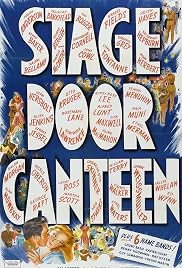
Stage Door Canteen (1943), 7-

"Dakota," a young soldier on a pass in New York City, visits the famed Stage Door Canteen, where famous stars of the theatre and films appear and host a recreational center for servicemen ... 
2h 12min | Comedy, Musical, Romance | 24 June 1943
Director: Frank Borzage
Stars: Cheryl Walker, William Terry, and dozens of stars of B'way and H'wood

http://www.imdb.com/title/tt0036384/
Watched on AmazonPrime; also have on a megapack. Muddy print.

In addition to seeing various stars, this is recommended to imagine what it would be like to be in a strange city, about to be deployed to war, and find yourself welcome in a place where the food and entertainment is free, and platonic companions are available too. Or to imagine being one of those companions, and all the emotions you could feel about these boys about to face battle.

In the Tap! Appendix for Ray Bolger's dance, starting at about 40 min.

Sol Lesser Productions, distr. UA, dir. Borzage; 7-

The Constant Nymph (1943), 7-

Fourteen-year-old Tessa is hopelessly in love with handsome composer Lewis Dodd, a family friend. Lewis adores Tessa, but has never shown any romantic feelings toward her. When Tessa's ... 
1h 52min | Drama, Music, Romance | 23 June 1943
Director: Edmund Goulding
Stars: Charles Boyer, Joan Fontaine, Alexis Smith

http://www.imdb.com/title/tt0035751/

I don't understand why I would have rated this 7 in Feb 2014. I was on the jury then, perhaps that was a factor. I'll leave it as a 7-, and see if a future viewing will alter the number.

I like the music by Erich Wolfgang Korngold, composer of the opera Die Tote Stadt (the dead city). I like the exploration of atonal dissonance versus melody.

I like most of JF's (1917-2013) Oscar-nom'd performance. When we first meet her at her ramshackle chateau, she's supposed to be a teenager, and she uses exuberant physicality and unkempt hair/clothes to convey it. When she appears later in a schoolgirl uniform (coat & hat) and calmer, she is much less convincing.

AS (b. 1921) is convincing as the cold stiff British aristocrat, older cousin to JF. I'm not sure why she decided to marry CB, but I believe her jealousy over JF.

CB (b. 1899, does share some facial structure with Zero Mostel, who imitates him in Du Barry Was a Lady (1943)) is not convincing as the composer who needs emotional seasoning (according to JF's father). And he doesn't really get the wrenching emotion until after his masterpiece is performed.

I can understand how a schoolgirl could have a crush on CB, and JF doesn't mature beyond that age. But for CB to realize he reciprocates that worship is an early rendition of Lolita ('62). One reviewer says the novel takes the relationship to the sexual level. Gghhh.

So what is portrayed as tragic romantic destiny here, is just psychological sickness to me. Hence my rejection of 7. Today I'd give it a flat 6.

Warner, dir. Goulding; 7-

Monday, February 12, 2018

Coney Island (1943), 8- Color

Set at the turn of the century, smooth talking con man Eddie Johnson weasels his way into a job at friend and rival Joe Rocco's Coney Island night spot. Eddie meets the club's star ... 
1h 36min | Musical, Comedy | 18 June 1943 | Color
Director: Walter Lang
Stars: Betty Grable, George Montgomery, Cesar Romero, Phil Silvers, Charles Winninger.
Angela Blue ... assistant choreographer
Ruth Fanchon ... dance supervisor (as Fanchon)
Hermes Pan ... choreographer / specialty dancer (uncredited)

http://www.imdb.com/title/tt0035749/
bootleg, decent copy
Added later: have official release now. Gonna put both in the binder, because again I'm not happy with the OR print (too dark).

In the Tap! Appendix for Betty Grable, Hermes Pan.

This isn't just a musical. It's a MUSICal. And in Glorious Technicolor, with apt costumes/sets.

Soundtracks with performances; chapter references for my bootleg copy (6 min chunks).  Title* means writers Rainger/Robin, who got a title card in the opening credits, likely writing these for this film. All others are one-offs (in terms of this film) and can be found on IMDb; none has year published, so not clear which, if any, are true to the time of the story. (?xx? was not in the Soundtracks.)
  • ch1, Coney Island*, sung by chorus/quartet as performance/participation in music hall
  • ch1, Put Your Arms Around Me, Honey (I Never Knew Any Girl Like You),, sung/wiggled by BG onstage, danced by BG & chorus
  • ch2, Who Threw the Overalls in Mistress Murphy's Chowder, sung by CW, PS, GM
  • ch4, ?In My Harem?, sung by PS, danced by chorus & specialty
  • ch5, When Irish Eyes Are Smiling, sung/danced by BG and Irish quartet mostly in background
  • ch6, Cuddle Up a Little Closer, sung/wiggled by BG in rehearsal, reprised slower
  • ch7, Cuddle Up a Little Closer, sung slow by BG onstage in hidden ankle&handcuffs
  • ch8, medley, sung/danced by BG & chorus onstage
    • Winter, Winter*
    • Pretty Baby (danced with pantomime horse)
  • ch9, Get the Money*, sung by PS on piano in office
  • ch9, Miss Lulu from Louisville*, sung/danced onstage by BG in "tropical" makeup, with chorus in blackface (but not white lips)
  • ch9, Take It from There*, sung onstage by BG with male sextette
  • ch11, Cuddle Up a Little Closer, sung/danced by Phyllis Kennedy 
  • ch11, Coney Island reprise, sung by BG, GM & others on the beach at night
  • ch12, Take It from There*, sung in audition by BG
  • ch15-16, There's Danger in a Dance*, sung/danced by BG, chorus, with specialties by HP and by a tango dancer. (HP & BG partner dance much better than in prior films.)
  • ch16, Take It from There*, sung by BG as encore to finale
This is lovely: using current music made to seem oldtimey to tell the story of bygone days. And the setting in the past means we avoid the war, except in the final title card.

And yes, there's a plot too. GM & CR are old friends/rivals in show biz. GM comes to CR's music hall to claim half ownership, and to improve the show. BG is the star, and he has plenty of suggestions for her. She resists, but after being forced to do it his way, sees the wisdom. (You have to make everyone in the audience think you're singing just to him.) As everyone prospers, a Hammerstein comes by to see her, with an offer to do a show on a more legit stage. GM pulls a stunt to prevent her getting the offer. After that's reconciled, and GM has ambition to open his own bigger place, CR pulls a similar stunt. Eventually everything & everyone is sorted out properly. The End. Buy Bonds.

GM is yet another leading man who doesn't sing/dance (I strongly suspect his singing was dubbed,  at least he doesn't try to dance), but he is much more pleasant than V.Mature.

Fox, dir. Lang; 8-

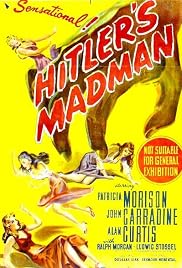
Hitler's Madman (1943), 7 {nm}

Story of the assassination of Reinhard Heydrich, Nazi SS commander, by Czech partisans and the reprisals inflicted by the Nazis on the Czechs.
1h 24min | Drama, War | 10 June 1943
Director: Douglas Sirk
Stars: Patricia Morison, John Carradine, Alan Curtis

http://www.imdb.com/title/tt0036005/

I'm sort of speechless after watching this. I knew the story, but this covers the things that interest me: the impact of the war on civilian life. Nice that this was released on the first anniversary of the destruction of the village Lidice, shown in the film.

I wonder whether audiences at the time dismissed the atrocities portrayed as exaggerated. From my reading, I know that, in general, they were not; in fact, they were sanitized for the film. Here's one review from NYT 28 Aug '43; looks like a non-professional because the byline is just initials. Here are its only 2 paragraphs:
¶If P. T. Barnum had ever been swept by a wave of righteous indignation the result might not have been greatly different from "Hitler's Madman," now at the Rialto. For here in one lurid diatribe, MGM's assortment of authors have summed up practically every indictment against the Nazis that they could crowd into one film. Around the central theme of the terror that led finally to the assassination of the Nazi "protector," Heydrich, by members of the Czech underground, the authors have developed several variations on brutality. Murder, pillage and enforced prostitution of Czech girls sent to the Russian front—all are listed here in an anti-Nazi bill of particulars. 
¶There are times when this violent poster method is rudely effective; what it tells is raw in the mind and emotions of every civilized man. Even in its poorly depicted scenes of brutality, "Hitler's Madman" inflames a common anger. The many crimes, climaxed by the slaughter of Lidice, shown here are too close to leave us unmoved. But the fact remains that as a film, "Hitler's Madman" is tritely constructed and badly played, with the exception of John Carradine who lends some cold reality to the central role of Heydrich. In its excess of horror the film has substituted shock for moral suasion and sensationalism for earnestness. Its anger burns too quickly. It lacks the deep fire, the grim conviction, the unspeakable resentment that will one day confront the architects of all this savagery.
By today's standards, this movie does NOT qualify as horror; I would call it restrained terror.  I wouldn't praise Carradine's cold reality (in fact, he portrays Heydrich as someone who enjoys the sadistic perks of his position), but I have the benefit of seeing Branagh portray him at the Wannsee Conference in Conspiracy (2001), where he slides from efficiency to charm to menace with ease.

The character of Himmler appears briefly, and I'm surprised they cast a fat actor. Himmler's weight was in normal range. It's hard for me to name an actor from '42-3 that would have been apt; the stars all have too much personality. But the name Donald Pleasance came to mind, and he actually played the character in The Eagle Has Landed (1976).

Patricia Morison (b. 1915, still living) does sing a bit, leading her music class of children. She had a terrific face and voice. Unfortunate that H'wood didn't use her better.

This was Sirk's first American film directing credit.

This was my first viewing of this film. I liked it because it told some Truth, and did it well enough that I was quite happy when Heydrich finally died. But I was not so invested in the villagers that I felt much when they sang an anthem as they were being killed. (Contrast that with my tearful reaction EVERY time I watch Casablanca, and the Free French start singing their anthem over the German soldiers' singing theirs.) I just talked myself down from 8 to 7.

Angelus Productions, Producers Releasing Corporation (PRC), distr. MGM, dir. Sirk; 7

Sunday, February 11, 2018

Hit the Ice (1943), 6+

Two newspaper photographers get mixed up with gangsters at a ski resort.
1h 22min | Comedy, Crime, Music | 2 June 1943
Directors: Charles Lamont, Erle C. Kenton (uncredited)
Stars: Bud Abbott, Lou Costello, Ginny Simms, Sheldon Leonard.
Harry Losee ... staged by: ice skating number


I must admit: I like this one as a comedy. It might be that I like my comedy frozen, since The Road to Utopia ('46) and The Gold Rush ('25) are favorites of mine, with Utopia being my fave Hope&Crosby film. Something about heavily clothed men meeting a bear in the wild? (That happens in all 3.) I don't remember Chaplin having a dog sled (but he did have a stray dog); the other 2 did. And they all have larger bad guys pursuing them.

Let's see if I can recall the plot here. Photogs A&C (why do these 2 always share a job?) run into a pal from the old neighborhood. He's a doctor, and they look for him in the hospital after a brief ambulance episode. While searching for him, they enter the room of a bank robber who has falsified his illness to establish an alibi for robbing the bank across the street. He mistakes them for Detroit gunmen he hired to assist the robbery (don't think the real gunsels ever showed). A&C are mistaken as the robbers, so they tag along with their doctor pal in his relocation to Sun Valley to start his new practice. The robbers also go to SV to evade the heat of the law, and to pursue A&C who supposedly have a photo of them at the bank during the robbery, but A&C are really in search of the $$ from the robbery to clear their names. Or something like that.

So how does this get to be a musical? The doctor got hooked up to SV by another old neighborhood pal who is now a bandleader with a long-term (permanent?) gig at SV. So the band and vocalists give us 4 songs along the way. 

Just looked back at other A&C films I've watched. Gave one a 7-, and it had the Condos Bros dancing. Another got a 6+, which I didn't explain too well, but Allan Jones was the lead, and I adore him. So this might be the first A&C flic I'm giving 6+ on its own comedic merits.

Universal, dir. Lamont & Kenton; 6+

Du Barry Was a Lady (1943), 6 Color

A night club's coatroom attendant who's in-love with the club's singer accidentally sips a drugged drink that makes him dream he's French King Louis XV courting the infamous Madame Du Barry.
1h 41min | Comedy, Fantasy, Musical | 30 May 1943 | Color
Director: Roy Del Ruth
Stars: Red Skelton, Lucille Ball, Gene Kelly.
Charles Walters ... dance director

http://www.imdb.com/title/tt0035829/
damaged disc - again! Ch16-20 skipped. Ordered replacement

In the Tap! Appendix for GK; only 1 solo dance (ch9). He also dances with LB & RS (sometimes +2 more) to the song Friendship (finale), done in a hick demeanor, and they're all doing the same stuff, so he might as well not be there. The solo dance is good, but not spectacular. The first portion is in the dark with a spotlight. That means his black tuxedo is against a black background, so you really only see his face, shirt, hands and the shine of his shoes. When the lights come up, 20 chorus girls join him, half of them in solid bright yellow-green, the other half in magenta. I already lose my bet about his doing aeroplane: he doesn't do it in this film. Instead he does his seal bit, a bouncing push-up, which he does across the chorus line, where they each have to jump over him.

The costumes/sets are terrific for Technicolor. But not all of the print looks sharp: that 3-strip offset effect is visible a bit. Or maybe it's my eyes.

A young Zero Mostel (b. 1915; LB b. 1911) adds to the comedy. He does a decent impression of Charles Boyer, actually assuming his facial expression pretty well. (A Funny Thing Happened on the Way to the Forum is '66, The Producers is '67).

Maybe I'll update the rating once I see the whole film. 6 was my prior rating.

MGM, dir. Del Ruth; 6

Lady of Burlesque (1943), 6+

After one member of their group is murdered, the performers at a burlesque house must work together to find out who the killer is before they strike again.
1h 31min | Comedy, Music, Mystery, Romance | 1 May 1943
Director: William A. Wellman
Stars: Barbara Stanwyck, Michael O'Shea, J. Edward Bromberg.
Daniel Dare ... dance director (as Danny Dare)

Watched on AmazonPrime; also have on a megapack. ok copy.

The only musical numbers are onstage at the burlesque theatre. In one, BS dances, doing the splits twice, plus some Russian-style squat-kicks. I was impressed.

I don't usually like MOS, but here, with BS, I do. Usually I don't like when the woman says "get lost" and the man persists. But here it's not just persistence; events push them together. But then BS turns against him once more (I didn't understand why) before events push some more.

The murder plot is hard to follow, especially when they explain the solution.

I like this movie. Without BS, I probably would not.

Hunt Stromberg Productions, distr. UA, dir. Wellman; 6+

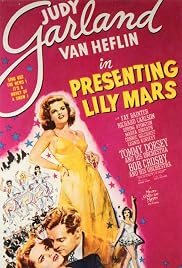
Presenting Lily Mars (1943); 6+

Talented small-town girl Lily Mars hounds producer John Thornway for a part in his new play, but he doesn't want anything to do with stage-struck amateurs. But when Lily follows him to New ... 
1h 44min | Comedy, Musical, Romance | 29 April 1943
Director: Norman Taurog
Stars: Judy Garland, Van Heflin, Fay Bainter
Ernst Matray ... dance director
Charles Walters ... choreographer: finale (uncredited)


Probably should be in the Tap! Appendix for the finale, which includes some tapping. By far the best part of this film is Charles Walters, JG's dance partner in the finale, starting in sc28 through sc29. He's handsome, agile, and moves in a more modern way than most white dancers, with his neck and hips, not just his legs and arms. JG moves with him, but in a more traditional way. I remembered this film for their number. Although what I remembered wasn't there, its elements were: lots of hopping and lots of avoiding the too-tall hat she wears. The way he makes his entrance is cute. The set is scary: when they dance under the suspended bandstand, I'm distracted. The fact that they're dancing to Broadway Rhythm is disappointing; some Freed/Brown songs were over-used.

The rest of the film is 6, 6-. JG wants to be a dramatic actress, not a musical star. Other than the 3 songs of the finale, JG sings 4 others, but other people sing 4 other songs too. Despite those stats, somehow it seems musical numbers are not the emphasis of performing, at least not with JG. 

The + is for the finale.

MGM, dir. Taurog; 6+

Saturday, February 10, 2018

Mission to Moscow (1943), 7 {nm}

Ambassador Joseph Davies is sent by FDR to Russia to learn about the Soviet system and returns to America as an advocate of Stalinism.
2h 4min | Drama, History, War | 22 May 1943
Director: Michael Curtiz
Stars: Walter Huston, Ann Harding, Oskar Homolka
LeRoy Prinz ... ballet stager (as Leroy Prinz)

http://www.imdb.com/title/tt0036166/

Per Wikipedia (which references a State Dept page), was 2nd United States Ambassador to the Soviet Union November 16, 1936 – June 11, 1938.

This is a pretty good history lesson, covering events through Pearl Harbor, including the Japanese war on China. Makes sense of the non-aggression pact between Stalin & Hitler, and Chamberlain's appeasement with Sudetenland: both stalled for time to build military strength for war.

Shows well the American resistance to getting involved in war, and then juxtaposes the event(s) that subsequently refute the pacifist stances.

This does show USSR as somewhat heroic, which goes too far. We needed the alliance, and maybe needed to portray our ally as better than they were in order to refute those who fought intervention. I haven't read Davies' book, but I suspect the rosy tint began there, not in the Warner script.

We get a lengthy segment of the trial of Trotsky-ites. Amazing that these people would testify against themselves, but the last witness is asked to explain that, and it makes some sense: he knows he is going to die, so what does he want to die for? At least he can tell the truth as his last act. (Which then raises the question: why were you involved in this conspiracy?) The film shows Davies attending the trial; it's covered in the film because Germany & Japan were involved in the plan to overthrow Stalin.

Completely ignored: Nazi purging of Jews. This film only covers Hitler's desire to rule the world, not his desire to cleanse it.

3rd film for Cyd Charisse, who dances some ballet in USSR here.

Warner, dir. Curtiz; 7

Cabin in the Sky (1943), 7

A compulsive gambler dies during a shooting, but he'll receive a second chance to reform himself and to make up with his worried wife.
1h 38min | Musical, Fantasy | 9 April 1943
Directors: Vincente Minnelli, Busby Berkeley (uncredited)
Stars: Ethel Waters, Eddie 'Rochester' Anderson, Lena Horne, Louis Armstrong, Rex Ingram, Duke Ellington & Orch, Hall Johnson Choir.
Archie Savage ... dance director (uncredited)

http://www.imdb.com/title/tt0035703/

First onscreen director credit for V.Minnelli. He staged musical numbers for Panama Hattie ('42) and IMDb lists him as 1 of 2 uncredited directors (in addition to the credited one).

Very strange to see LH as a seductive woman. She usually just stands up and sings. Here she's playing a part (and sings).

In the Tap! Appendix for Bill Bailey, John Bubbles. We definitely get 2 tap routines, and I believe J.Bubbles is the dapper one twirling the cane in sc22, Shine, and dancing with EW in sc26 (Honey in the Honeycomb reprise; she does a couple of high kicks). The other tap routine, likely Bill Bailey, is in sc14, Takin' a Chance on Love, the most familiar song in the film. Soundtracks lists 9 songs overall.

This takes place in a time when the new washing electric machine that gets delivered looks like something from the 30's. The whole thing is so stylized, without automobiles, so it's tough to pinpoint the time. No mention of the war.

The commentary track has 6 voices, primarily Dr. Todd Boyd, a black professor of Critical Studies within film at USC with Drew Casper. He brings the modern interpretation of racial aspects, some of which raises my eyebrow. For instance, when describing the 2 types of women in the film (and there are only 2 named women) as matriarchal vs tramp, my reaction is "that's not just a black thing, it's a woman thing." The other assertion I frowned at: that by awarding the lottery winnings to EA, the film asserts that EA is an immature/weak/unable to handle money. Well, yes, I think most people who get a bulk of money, especially unearned money, don't handle it well. $50k in 1943 is $730k in 2'2018.

The musical numbers are "integrated" as D.Casper calls it; namely the songs had a dramatic function within the story.

This is good stuff; valuable for how mainstream H'wood delivered an all-black story in '43, and for the performances of the stars.

MGM, dir. Minnelli & Berkeley; 7

Hello Frisco, Hello (1943), 6+ Color

In turn-of-the-century San Francisco, an ambitious vaudevillian takes his quartet from a honky tonk to the big time, while spurning the love of his troupe's star singer for a selfish heiress.
1h 39min | Comedy, Musical, Romance | 26 March 1943 | Color
Director: H. Bruce Humberstone (as Bruce Humberstone)
Stars: Alice Faye, John Payne, Jack Oakie, Lynn Bari, Laird Cregar, June Havoc.
Val Raset ... dances staged by
Hermes Pan ... choreographer (uncredited)


Remake of AF/JO film King of Burlesque (1936). JP is in the Warner Baxter (titular) role.

Home of AF's hit You'll Never Know.

The plot is centered on JP's ambition, which over-reaches to marry a socialite, ruining his success in show biz. Didn't feel more familiar than unusual, despite only 7 years since the original. JP and the different time/setting helped a lot.

REALLY nice to get away from the War. This is set in the Gay 90's, Barbary Coast. Lots of music hall entertainment, onstage, often with chorus girls/boys dancing along. Beautiful use of color. Nice tunes. 

Fox, dir. Humberstone; 6+

It Ain't Hay (1943), 6

Adaptation of the Damon Runyon story 'Princess O'Hara', in which the horse of a street vendor is replaced by a racehorse.
1h 20min | Comedy, Musical | 19 March 1943
Director: Erle C. Kenton
Stars: Bud Abbott, Lou Costello, Grace McDonald, Cecil Kellaway, Eugene Pallette, Samuel S. Hinds.
Daniel Dare ... choreographer 

http://www.imdb.com/title/tt0036047/

Although we have 5 musical numbers, and 2 of them have dancing, this was not classified as a Musical. Change submitted and accepted. I watched it because it's in the Tap! Appendix for Lou Costello, Four Step Brothers, Grace McDonald, Patsy O'Connor.

The Step Brothers appear in scenes 6 and 17 (finale; once they leave the stage they don't come back). Good stuff; hope to see them again, and for longer stretches of time. LC, GM & PO don't dance much, but enough you can see they could have done more.

Confusions: LC makes the dray horse sick by feeding him peppermint, then does something that makes the horse get up. Everyone gets excited, and we have a big celebratory production number in the street with everyone in the neighborhood. Next morning: the horse is dead. What?

A&C decide to replace the horse (CK makes his living as a horse-drawn cabbie). I'll skip to the confusing part: they end up at a stable, and take a horse. At least I don't remember their buying it. Why did they think they were entitled, and why weren't they prosecuted once they were discovered? (I know, because they're A&C.) Maybe it was explained and I just got distracted.

I'm really conflicted whether to put this on the worthwhile dancing list since it's not a musical. I think yes, and with 5 numbers, I'll pretend it's a musical too. I did.

Universal, dir. Kenton; 6